
A hip that clicks, snaps or clunks with certain movements is extremely common and, on its own, almost always harmless. What decides whether it needs any attention at all is whether the noise arrives with pain, and where in the hip you feel it.
A hip that also catches or aches deep in the groin may be impingement, which PhysioHub's guide to hip impingement and arthroscopy covers in full.
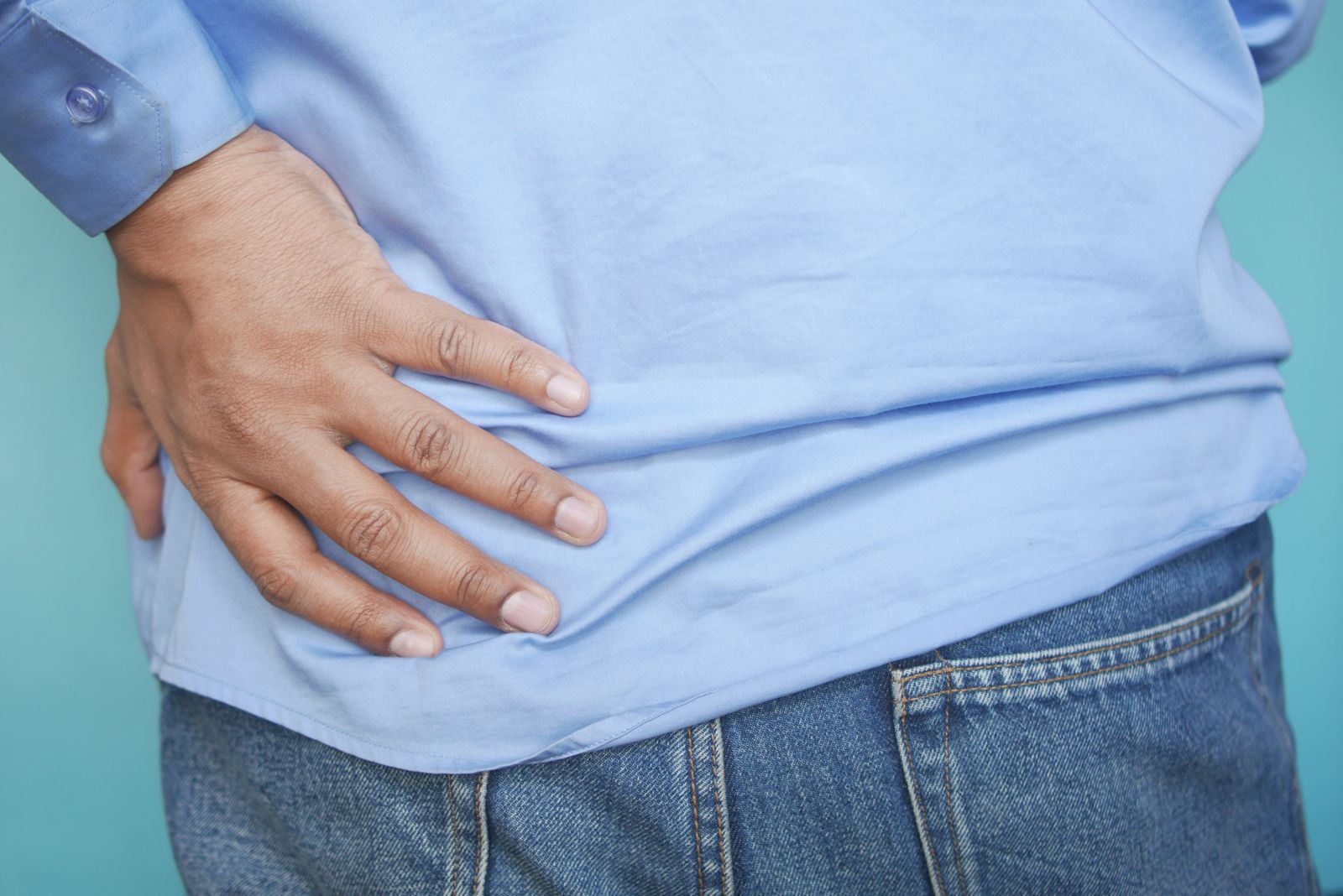
Most hip clicking is "snapping hip", where a tendon or band flicks over a bony bump as you move, producing an audible snap or a felt clunk. It is a mechanical, benign phenomenon and painless clicking is not a sign of damage. The NHS overview of hip pain is useful if the clicking is joined by discomfort.
Two patterns account for nearly all of it, and where you feel the snap separates them.
External snapping hip is the one most people notice. The iliotibial band flicks across the greater trochanter, the bony point you can feel on the outside of the hip, as the hip moves through flexion, extension and rotation. The snap is felt on the outer hip rather than deep inside the joint, and people commonly describe it as the hip momentarily popping out of place, while the joint itself stays exactly where it is.
Internal snapping hip comes from the iliopsoas tendon, one of the main hip flexors, moving over a bony ridge at the front of the pelvis or the front of the femoral head. The snap sits at the front of the hip or deep in the groin, and it is the one more likely to come with a mild ache in the same spot. Where a hip hurts without clicking, hip pain: causes and what relieves it sorts the likely sources by location.
The StatPearls review of snapping hip syndrome puts the condition in roughly 5 to 10% of the population, most of whom have no pain with it, and slightly more women than men. Among competitive ballet dancers the figure reaches close to 90%, with 80% of those affected on both sides, which tells you how strongly repeated end-range hip movement drives it.
Each pattern has its own provocative movement, and that is often more informative than the noise itself.
External snapping is brought on by the hip cycling repeatedly through flexion and extension with rotation. The everyday versions are:
Internal snapping needs a more specific movement: taking the hip from flexed and turned out, the frog-leg position, back to straight with the leg turned in. Standing up from sitting cross-legged does it. So does swinging the leg through in hurdling, the drive phase of a sprint, and pedalling.
If you can reproduce your snap on demand with one of these, that is useful information to bring to an assessment. Reproducing it deliberately is also safe when it does not hurt, since the movement is a tendon travelling over bone rather than anything giving way.
Painless clicking generally needs nothing at all. It is worth an assessment when the clicking comes with pain, catching or a sense of the hip locking or giving way, when it follows an injury, or when it limits your activity. Those features suggest something inside or around the joint that is worth looking at, rather than a harmless tendon flick. Where the pain rather than the noise has become the main problem, our guide to hip pain works through the tendon, joint and referred causes and how each one is treated.
For most people the snap stays exactly what it is, a tendon moving over bone. Two associations are worth knowing about, and both announce themselves through pain rather than noise.
On the outside of the hip, a painful external snap often sits alongside pain at the greater trochanter itself. That was traditionally labelled trochanteric bursitis, and East Sussex Healthcare's own patient information on gluteal tendinopathy now treats those names as interchangeable, with the emphasis on the gluteus medius and minimus tendons that attach there. Tenderness lying on that side and pain on single-leg loading point that way far more reliably than the snap does.
At the front, a painful internal snap raises the question of what else is happening inside the joint. In around half of internal snapping hip cases an additional problem inside the joint is identified, the labrum being the usual one. The symptoms that suggest it are different from the click: catching, a deep ache that lingers after activity, or a hip that feels as though it might give way in deep flexion.
Painless snapping in either location carries neither association, which is why the pain question does more work here than the noise.
When a clicking hip does cause symptoms, the answer is rarely to chase the noise itself. Strengthening the hip and improving how you control movement usually reduces the snapping and settles the associated pain. For snapping linked to tight or overloaded tendons, a graded strengthening and loading plan is the mainstay. Realistic timelines are covered in how long does physiotherapy take to work?
Loading the hip properly outperforms the alternatives, and the trial evidence on the lateral hip is clear enough to quote. In the LEAP randomised trial of 204 people with gluteal tendinopathy, an eight-week education and exercise programme produced success in 51 of 66 participants, against 38 of 65 for a single corticosteroid injection and 20 of 68 for wait and see, with lower pain scores in the exercise group at both 8 and 52 weeks.
What the programme contains depends on the pattern. External snapping responds to gluteal and abductor strengthening, control of the pelvis in single-leg stance, and managing the loads that provoke it. Internal snapping needs the hip flexors loaded rather than only stretched, alongside retraining the movement that produces the snap.
A corticosteroid injection has a place where pain around the greater trochanter is limiting what you can do at all, on the understanding that it opens a window for the strengthening to happen in.
Surgery is uncommon and comes late. It enters the conversation when the snapping is painful, has failed a genuine course of rehabilitation lasting months rather than weeks, and is restricting daily life or sport, or when imaging has confirmed something inside the joint such as a labral tear. The procedures release or lengthen the tendon involved, endoscopically or open: the iliotibial band or the gluteus maximus insertion for external snapping, the iliopsoas for internal. For the great majority of clicking hips, none of this arises.
The first question in the room is nearly always the same one: does the click mean I am wearing the joint out? For most hips the honest answer is no. A tendon flicking over the front of the hip or across the outside of the thigh makes a loud, repeatable snap that carries no more clinical weight than a cracked knuckle, and plenty of the Pilates and gym regulars at Freedom Leisure in Uckfield have clicked their way through years of training with nothing coming of it.
The version worth assessing is the click that arrives alongside pain, catching, or a hip that feels like it might give way in deep flexion, because that combination says something about how the joint is being loaded. Finding out which one you have is the slow part locally: the East Sussex MSK Community Partnership's published averages put a hip advanced practitioner appointment at around ten weeks in mid-2026. A hands-on assessment reproduces the click on the day, tests hip control under load, and separates the harmless from the meaningful.
If you are unsure which of those two clicks you have, a free discovery and triage call will tell you whether it is worth looking at properly.
Is a clicking hip a sign of arthritis?
Not usually. Painless clicking is a normal mechanical noise. Arthritis tends to bring pain, stiffness and reduced movement rather than clicking alone.
Can I make it stop?
Often the noise reduces as you strengthen and control the hip better, though a completely painless click may simply be how your hip moves, and that is fine.
PhysioHub – Empowerment through Evidence-Based Education.
Every body is different. Book a thorough assessment and get advice that is specific to you and your goals.
Book an Appointment