
Pain felt at the front of the shoulder, especially when you reach overhead, lift, or lie on that side, is one of the most common shoulder presentations. The front of the joint is where several tendons pass and pull, so pinning down which structure is irritated is the key to fixing it properly.
Where the rotator cuff turns out to be the structure involved, PhysioHub's guide to rotator cuff physiotherapy covers the loading programme.
The NHS page on shoulder pain lists the wider causes.
For most front-of-shoulder tendon pain, complete rest tends to leave the tendon weak and the problem recurring. Progressive strengthening of the rotator cuff and shoulder blade muscles is the treatment with the best evidence, calming the tissue while rebuilding its capacity to handle the loads you need. This takes weeks of consistency, and it works. Our detailed guide to physiotherapy for rotator cuff injury walks through the programme. For a set of starting exercises in one place, our shoulder pain exercises gather them into a routine you can do at home.
Two things slow recovery: pushing through sharp pain with heavy overhead work before the tendon is ready, and the opposite, avoiding all loading so the shoulder deconditions. The middle path, graded loading guided by your symptoms, is what restores a strong, pain-free shoulder.
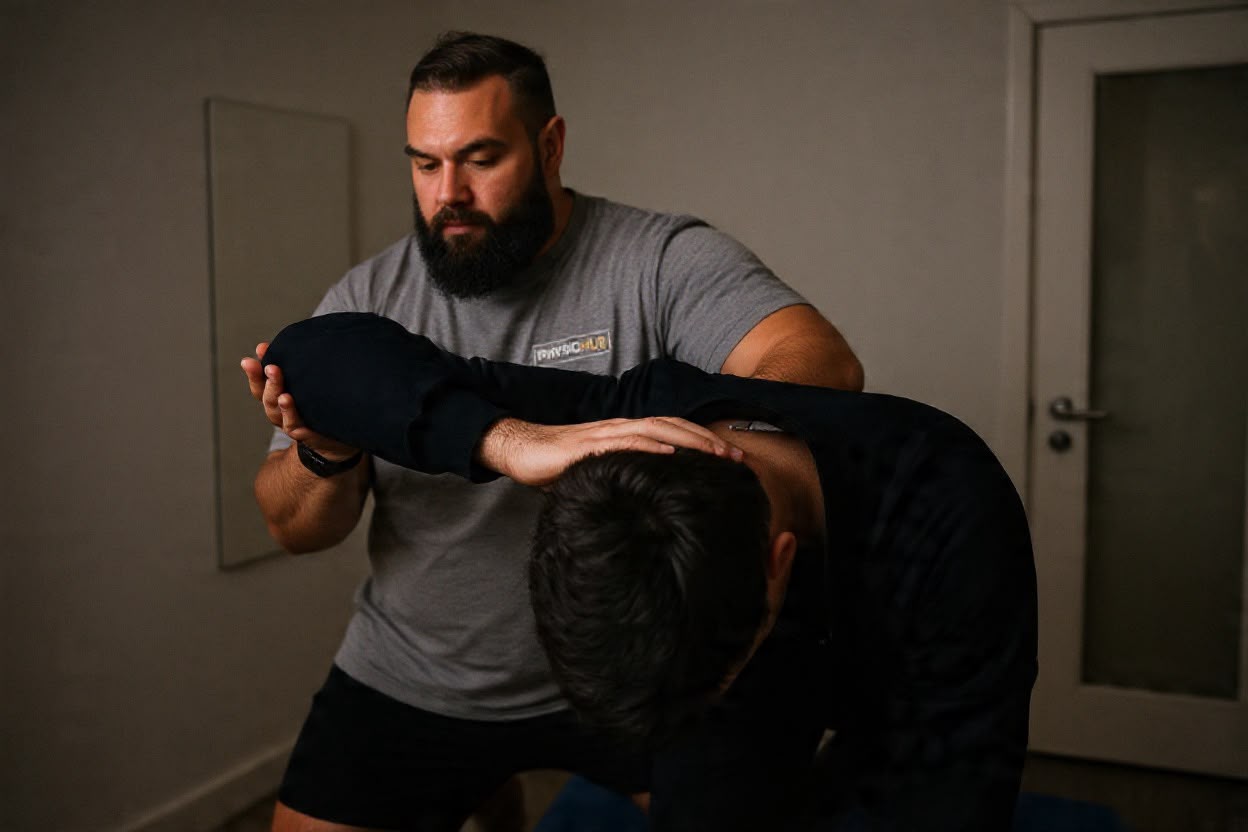
The question people bring with front shoulder pain is which of the things listed on their scan report is the one that actually hurts. Alex, a HCPC-registered physiotherapist, works through it regularly with swimmers, lifters, decorators and people who simply cannot lie on that side any more.
A report lists findings without ranking them, and several of them are usually incidental. What ranks them is testing each structure against your symptoms. The rotator cuff, the long head of biceps and the acromioclavicular joint all produce pain at the front of the shoulder, and each has its own provocation tests, so reproducing your exact pain on one of them is worth more than the whole report. From there the loading order matters: the right tissue, loaded progressively, in a sequence built around whether the goal is overhead sport, a full working day, or a night's sleep on that side.
Our shoulder pain page sets out how that treatment is structured.
Should I stop using the arm?
No. Modify aggravating movements for now, but keep the shoulder working within comfort. Total rest usually prolongs the problem.
How long does front shoulder pain take to settle?
Tendon-related shoulder pain typically improves over several weeks to a few months of consistent strengthening, depending on how long it has been present.
PhysioHub – Empowerment through Evidence-Based Education.
Every body is different. Book a thorough assessment and get advice that is specific to you and your goals.
Book an Appointment