
The five dumbbell chest exercises worth programming are the flat dumbbell bench press, the incline press at 30 degrees, the dumbbell flye, the floor press and the single-arm press. The flat press builds the most chest strength and the 30-degree incline is the best angle for the upper chest, measured across five bench inclinations. Front-of-shoulder pain changes the answer, and the floor press is usually where that starts.
Pressing pain at the front of the joint has several possible causes, which is the subject of PhysioHub's guide to front shoulder pain.
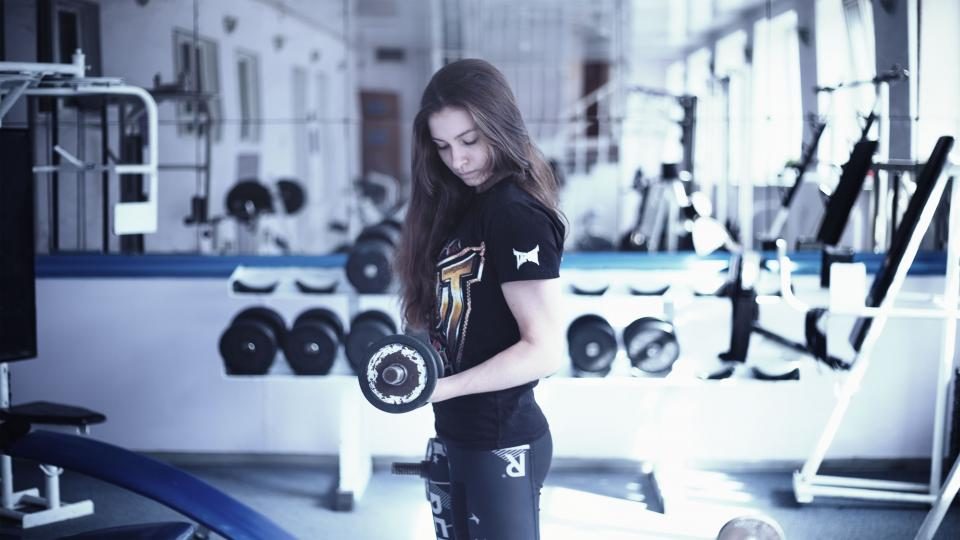
Every exercise here needs a pair of dumbbells. Only two of the five need a bench, which matters more than most programmes assume.
| Exercise | Best for | What makes it stand out | Typical dose |
|---|---|---|---|
| 1. Flat dumbbell bench press | Overall chest strength and size | The heaviest dumbbell chest exercise, and the middle and lower chest work hardest at 0 degrees | 3–4 × 6–12 |
| 2. Incline press at 30° | Upper chest | The measured peak for the upper pectoralis major across five bench angles | 3 × 8–12 |
| 3. Dumbbell flye | Chest under stretch | Loads the chest with the elbows almost straight, which pressing never does | 2–3 × 10–15 |
| 4. Dumbbell floor press | Pressing with a sore shoulder | The floor caps the depth, which removes the position most shoulders object to | 3 × 8–12 |
| 5. Single-arm dumbbell press | Side-to-side differences and trunk control | The trunk has to resist being twisted off the bench | 3 × 8–10 each side |
This is a documentary review of published EMG research and clinical practice rather than a laboratory test run by us. Around a dozen dumbbell chest exercises were considered, including the decline press, the pullover, the squeeze press, the crush press, press-ups on dumbbell handles and the five ranked here.
The ranking criteria were how much load the exercise allows the chest to handle, which part of the pectoralis major it emphasises, how well a sensitive shoulder tolerates its bottom position, whether it needs a bench, and how easily it progresses.
The main sources were a 2020 study of five bench inclinations in the International Journal of Environmental Research and Public Health, a 2020 comparison of the barbell bench press and the dumbbell flye in the Journal of Sports Science and Medicine, and a 2020 study of deltoid activation across four upper body exercises in the Journal of Human Kinetics. Evidence checked in August 2026.
Two honest limits. The bench angle study measured a barbell bench press rather than dumbbells, so the angle finding is applied here by reasonable extension rather than by direct measurement. And EMG activation is a laboratory measure of muscle activity during a set, which correlates with, without being the same as, the muscle a programme builds over months.
Start with the angle you need. The bench angle decides which part of the chest does most of the work, and the evidence is unusually specific about it. Flat pressing loads the middle and lower chest hardest, 30 degrees loads the upper chest hardest, and beyond 45 degrees the front of the shoulder takes over.
Check what the bottom position does to your shoulder. Pressing pain almost always appears in the deepest part of the range. An exercise that caps the depth, such as the floor press, keeps you training while the shoulder settles.
Decide how you will make it harder. Dumbbells increase in fixed steps, often 2kg at a time, which is a large jump on a small exercise. Adding a repetition, adding a set, or slowing the lowering phase to three seconds all work between weight jumps.
Be realistic about getting the weight into position. The limiting factor on heavy dumbbell pressing is the set-up rather than the press. Sit with the dumbbells on your thighs, kick them back one at a time as you lie down, and reverse it to finish the set.
Balance the pushing with pulling. A chest programme with no rowing tends to produce a stiff, sore front shoulder within a couple of months.
What it is
Lying flat on a bench, pressing two dumbbells from beside the chest to arms' length above it.
Who it suits
Anyone whose main goal is chest strength or size, and anyone whose shoulders tolerate the bottom position comfortably.
How to do it
Set the shoulder blades down and back into the bench. Lower the dumbbells to roughly chest height with the elbows at about 45 degrees from the body rather than flared to 90. Press up and slightly together without letting the dumbbells clash. Three to four sets of 6 to 12 repetitions, keeping two in reserve on most sets.
What the evidence supports
The flat position is where the bulk of the chest works hardest. In a 2020 study in the International Journal of Environmental Research and Public Health, 30 trained adults were measured pressing at 0, 15, 30, 45 and 60 degrees at 60 per cent of one-repetition maximum. The middle and lower portions of the pectoralis major showed their highest activity at 0 degrees, and the flat press produced similar overall pectoralis and anterior deltoid activity to the inclined variations while allowing more weight.
Limits and cautions
The deepest part of the range is where front-of-shoulder pain shows up, particularly for anyone with rotator cuff-related shoulder pain. Our article on rotator cuff-related shoulder pain explains what that diagnosis covers. Stopping when the upper arms reach the line of the torso removes most of the provocation and costs very little.
Time and effort
Around 10 minutes for four working sets with proper rest, plus a couple of lighter build-up sets.
Why it made the list
It ranks first because it is the exercise that carries the most load for the chest while still allowing each arm to move on its own path. Everything else here supports it.
What it is
The same press performed on a bench set to a shallow incline, which shifts the work towards the collarbone end of the chest.
Who it suits
Anyone who wants upper chest development, and anyone whose flat pressing has plateaued and needs a second angle in the programme.
How to do it
Set the bench to 30 degrees, which is usually the second notch rather than the steep setting most people choose. Lower the dumbbells to the upper chest and press up. Three sets of 8 to 12. Expect to use around 10 to 20 per cent less weight than on the flat press.
What the evidence supports
Thirty degrees is the measured peak. In the same 2020 five-angle study, the upper portion of the pectoralis major reached its maximum EMG activity at a 30-degree bench inclination. The authors also found that inclinations greater than 45 degrees produced significantly higher anterior deltoid activation and reduced the pectoralis major's contribution, which is the argument against the steep incline settings that gyms tend to leave benches on.
Limits and cautions
Steeper works against you here, since 45 degrees onwards is effectively a shoulder press with a chest label. Anyone with a stiff neck or upper back should check the bench supports the head properly at this angle.
Time and effort
About eight minutes for three working sets.
Why it made the list
It is the only exercise on the list with a specific, measured optimum, and the upper chest is the region most often left behind by flat pressing alone.
What it is
Lying on a bench or the floor with the arms almost straight, opening them out to the sides and bringing them back together in an arc.
Who it suits
Anyone adding chest volume after pressing, and anyone who wants to load the chest in its lengthened position without loading the triceps.
How to do it
Keep a soft, fixed bend in the elbows and open the arms until the hands are roughly level with the chest, then bring them back over the chest in the same arc. Two to three sets of 10 to 15 with a weight you could control for several more repetitions. Depth matters more than weight in this exercise.
What the evidence supports
The flye is a supporting exercise rather than a main one, and the measurement backs that up. A 2020 study in the Journal of Sports Science and Medicine compared the barbell bench press with the dumbbell flye in 17 resistance-trained men at six-repetition-maximum loads and found the bench press produced 8 to 81 per cent higher activation across the pectoralis major, anterior deltoid and triceps. The flye produced 57 to 86 per cent higher biceps activation, which reflects how much work a straight arm does simply holding the weight out to the side.
Limits and cautions
This is the exercise most likely to irritate a shoulder, because it loads the joint at its longest position with a long lever. Reduce the range before reducing the weight, and stop the descent when a stretch appears at the front of the shoulder rather than the chest.
Time and effort
Six minutes at the end of a chest session.
Why it made the list
It reaches a position pressing never does, and it does so with a load the chest can control. Used after pressing and at a moderate weight, it earns its place.
What it is
A press performed lying on the floor, so the upper arms stop when the elbows touch the ground.
Who it suits
Anyone with front-of-shoulder pain when they press, anyone training at home without a bench, and anyone returning to pressing after a shoulder problem.
How to do it
Lie on the floor with the knees bent, dumbbells at the chest, elbows at about 45 degrees. Lower until the upper arms rest lightly on the floor, pause for a moment, then press. Three sets of 8 to 12. The pause is the useful part, because it removes the bounce.
What the evidence supports
The floor press has no dedicated trial behind it, and its case is mechanical rather than experimental. Capping the range keeps the upper arm from travelling behind the line of the torso, which is the position that provokes most pressing-related shoulder pain, while leaving the chest and triceps to do the work. In practice it is the exercise that most often lets someone keep training through a shoulder episode, which is worth more than a marginal difference in activation.
Limits and cautions
The shortened range means less chest work per repetition, so it is a substitute rather than an upgrade for a healthy shoulder. Resting the elbows heavily on a hard floor can bruise, so use a mat.
Time and effort
Eight minutes, and no bench to set up.
Why it made the list
It is the exercise that keeps a chest programme alive when the shoulder objects, and it is the most useful pressing variation for anyone training at home.
What it is
A bench or floor press performed with one dumbbell at a time, with the free hand off the floor.
Who it suits
Anyone with a noticeable difference between sides, anyone rebuilding after a one-sided injury, and anyone who wants trunk work built into a pressing exercise.
How to do it
Set up as for a normal press with a single dumbbell. Brace hard so the body does not rotate towards the loaded side, and press without letting the opposite shoulder lift off the bench. Three sets of 8 to 10 each side, using around 60 to 70 per cent of what you would use per hand in a two-arm press.
What the evidence supports
Like the floor press, this is a mechanically reasoned choice rather than a trial-backed one. What is well established is that dumbbell work exposes side-to-side differences a barbell hides, and that pressing one side at a time adds a genuine anti-rotation demand to the trunk. It pairs well with the anti-rotation work in our guide to great ab exercises.
Limits and cautions
The set-up is awkward and the trunk usually fails before the chest does, which caps the load. Anyone with current low back pain should keep the weight modest here.
Time and effort
Ten minutes, since both sides need doing.
Why it made the list
It answers a question the other four cannot: whether the two sides are actually equal. That matters most to anyone who has had a shoulder injury and assumed it resolved.
| Exercise | Chest emphasis | Bench needed | Demand on a sore shoulder | Load ceiling | Trunk demand |
|---|---|---|---|---|---|
| Flat dumbbell press | Middle and lower | Yes | High at the bottom | Highest | Low |
| Incline press at 30° | Upper | Yes, adjustable | Moderate | High | Low |
| Dumbbell flye | Whole chest under stretch | Helpful, not essential | Highest of the five | Low | Low |
| Floor press | Middle, shortened range | No | Lowest | Moderate | Low |
| Single-arm press | One side at a time | Optional | Moderate | Limited by the trunk | High |
Read the fourth column first if pressing currently hurts. It reorders the whole list.
If you have a bench, dumbbells and no pain, run the flat press and the 30-degree incline as your two main exercises and finish with flyes. That covers every part of the chest.
If your shoulder hurts at the bottom of a press, move to the floor press for three to four weeks, keep the weight moderate, and reintroduce depth gradually. Pain still present after that is worth having looked at rather than programmed around.
If you train at home with dumbbells only, use the floor press, flyes on the floor and press-ups with the hands on the dumbbell handles. Our guide to the best exercises without equipment covers how to progress the press-up itself.
If one side is clearly weaker, lead every chest session with the single-arm press on the weaker side and match the stronger side to it rather than the other way round.
If your goal is upper chest specifically, put the 30-degree incline first in the session while you are fresh, and leave the bench at 30 rather than 45.
Front-of-shoulder pain during pressing tends to peak at the bottom, where the upper arm drops behind the line of the body and the front of the joint takes the stretch. Three changes usually settle it, tried in this order.
Depth. Stop the dumbbells a few centimetres above the chest, or switch to the floor press for a few weeks so the floor sets the bottom position for you. Grip. Turn the palms to face each other and bring the elbows in to around 45 degrees from the body instead of flaring them out to shoulder height. Tempo. Lower over three seconds and pause briefly at the bottom, which removes the bounce that loads the front of the joint hardest. Grip width matters with a bar too: a 2007 review in the Strength and Conditioning Journal linked grips wider than one and a half times shoulder width with more shoulder injury, and found that narrowing the grip cost only around 5 per cent of maximum load.
Our guide to front shoulder pain sets out the usual causes, and our shoulder pain exercises are a sensible programme to run alongside a lighter pressing week. A sudden tearing feeling at the front of the armpit during a heavy press, followed by bruising, can mean a pectoral tendon rupture and needs assessing that week.
Are dumbbells better than a barbell for chest?
A barbell produces more measured muscle activity, and dumbbells offer more range and a free rotation path. The 2020 comparison in the Journal of Sports Science and Medicine measured 17 resistance-trained men at six-repetition-maximum loads and found the barbell bench press produced 8 to 81 per cent higher activation of the pectoralis major, anterior deltoid and triceps than the dumbbell flye. Dumbbells win where a shoulder needs to choose its own path, where no spotter is available, or where one side is weaker than the other.
What bench angle works the upper chest?
Thirty degrees. The 2020 five-angle study measured 30 trained adults pressing at 0, 15, 30, 45 and 60 degrees and found peak activation of the upper portion of the pectoralis major at 30 degrees. The middle and lower portions were highest at 0 degrees, and angles above 45 degrees shifted the work to the anterior deltoid.
How heavy should dumbbells be for chest?
Heavy enough that the last two or three repetitions of a set of 8 to 12 are genuinely difficult with good control. If you can complete 15 repetitions at the same speed throughout, the weight is too light for strength. Getting heavy dumbbells into the start position safely is the real ceiling, so learn the knee-kick set-up before chasing weight.
How often should you train chest?
Two sessions a week suits most people, spaced by at least 48 hours, with 3 to 4 working sets of pressing each time. That fits inside the NHS advice to do strengthening activity covering all the major muscle groups on at least 2 days a week.
Do dumbbell flyes build chest?
Yes, as a supporting exercise rather than a main one. The same 2020 comparison found lower pectoralis major activation in the flye than the bench press, along with higher biceps activation. Use flyes after pressing, with a moderate weight and a controlled range.
Why does my shoulder hurt when I bench press?
The most common reason is the bottom of the range, where the upper arm travels behind the line of the body and the front of the shoulder takes the strain. Reducing the depth, tucking the elbows to roughly 45 degrees, and switching to a floor press for a few weeks resolves a good proportion of these. Pain that persists past three weeks of modified pressing needs assessing.
Can you train chest with only dumbbells at home?
Yes. The floor press covers pressing without a bench, flyes on the floor cover the stretch position at a safe range, and press-ups with the hands on the dumbbell handles add depth. A pair of adjustable dumbbells and a floor is enough to build and maintain chest strength for years.
PhysioHub – Empowerment through Evidence-Based Education.
Pressing is where many lifters first notice pain at the front of the shoulder, and our guide to shoulder pain sets out the usual causes and how each responds to load.