
Surgery fixes a structure. Rehabilitation is what turns that repair back into a working knee, shoulder, hip or spine. Many people leave hospital with a photocopied exercise sheet and a follow-up months away, which is a thin plan for the most important phase of recovery. Here is what a joined-up post-surgery rehabilitation service should actually give you.
The strength you take into an operation shapes how this goes, which PhysioHub's guide to prehab before surgery covers.
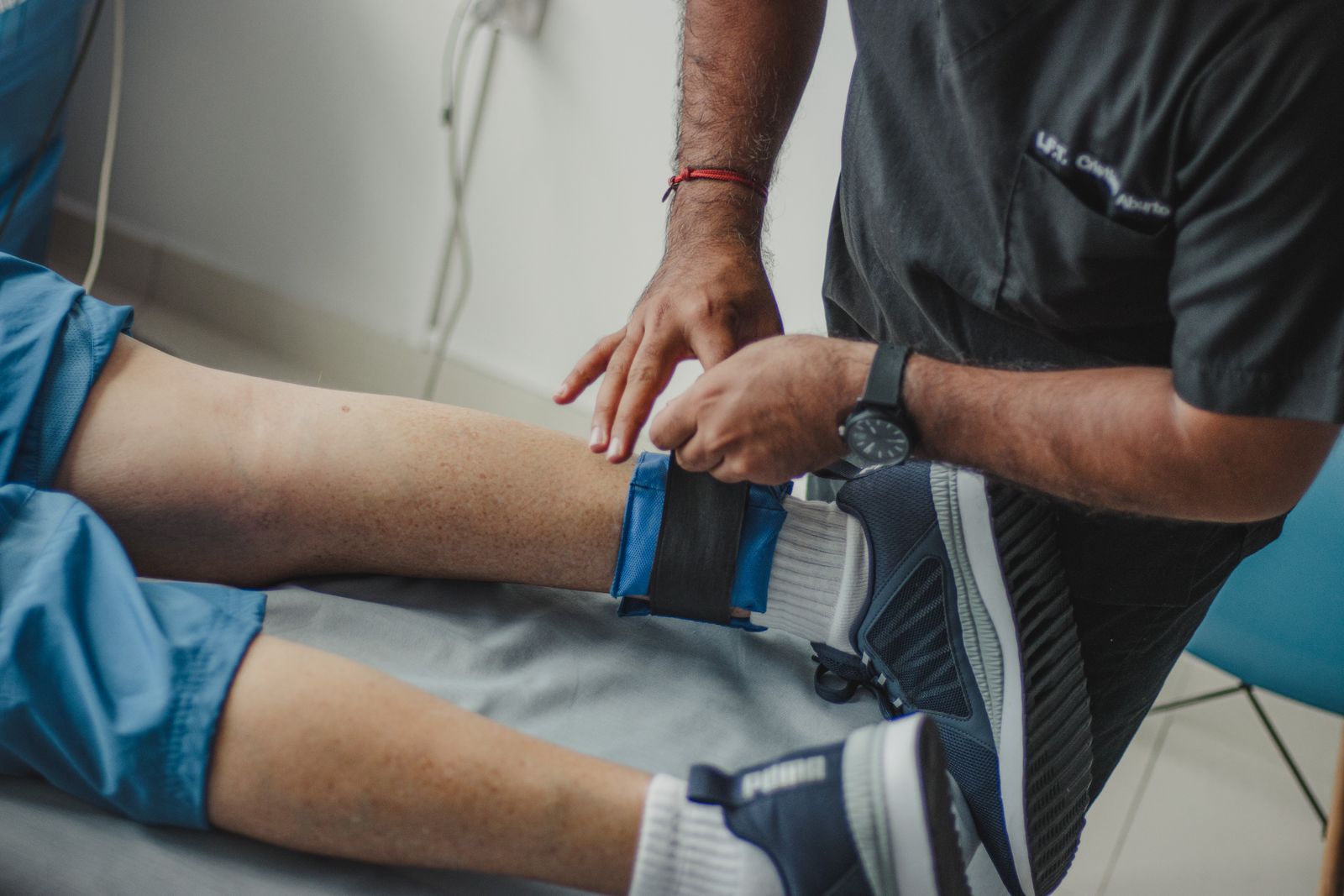
Searches for rehabilitation services turn up everything from residential centres to single physiotherapy appointments. Whatever the setting, the components of good post-operative rehab are the same:
If a service offers only passive treatment, or hands you the same exercises at week two and week ten, you are getting a fraction of what recovery needs.
1. Protect and settle (roughly weeks 0 to 2). Respect the surgical precautions, control swelling, restore gentle movement, keep the rest of the body working. Early guided movement is standard practice now: for joint replacement, NICE recommends rehabilitation on the day of surgery where possible and within 24 hours (NICE NG157).
2. Restore movement (weeks 2 to 6). Full or near-full range where the operation allows it, normal walking pattern, weaning off aids, everyday tasks back under control.
3. Rebuild strength (weeks 6 to 16). Progressive loading with resistance that increases over time. This is where lost muscle comes back, and it is the stage most commonly skipped.
4. Return to load (3 months onwards). Speed, impact, twisting, lifting, sport-specific or job-specific demands, tested rather than assumed. Our guide to returning to sport after injury covers how those criteria are set.
Residential or inpatient rehabilitation units suit people with complex needs: major neurological events, multiple injuries, significant medical complications, or those who cannot manage safely at home. They provide daily multidisciplinary input under one roof.
Outpatient physiotherapy clinics suit the large majority of orthopaedic surgery: joint replacements, ligament reconstructions, shoulder repairs, spinal surgery, tendon repairs. You get regular expert review and a plan you carry out between sessions, which is what drives adaptation anyway.
Home-based rehab suits the first weeks after major surgery, older adults who cannot travel easily, and anyone whose main goals are around the house itself. It works best when it is still supervised and progressed rather than left to run on its own.
Many people move through more than one of these. What matters is that the thread is not dropped between them, since the handover between hospital discharge and community rehab is where most programmes fall apart.
Muscle mass and strength fall quickly after surgery, partly from disuse and partly from the way pain and swelling inhibit muscle activation. Waiting until everything feels comfortable before starting means starting from a lower base, with stiffness and compensations already learned.
Guided early rehab does the opposite: it works within the surgical restrictions while keeping the rest of the system loaded, so the muscle you keep is muscle you do not have to rebuild. The pace has to respect healing tissue, and a physiotherapist who knows the protocol is the person who keeps you at the edge of what is safe rather than well inside it.
The gap after an operation sits between hospital discharge and ordinary life. NHS follow-up is typically a set number of sessions or a group class with a consultant review some months out, and the 10 Year Health Plan's neighbourhood health centres are meant to bring rehabilitation closer to home as the first wave lands from 2026/27. In the meantime, the question people ask most in that gap has nobody obvious to answer it: how much can I actually do now?
It has a measurable answer. Your operation note sets the protocol and any precautions, testing both sides shows the real deficit instead of the assumed one, and every progression can be tied to a criterion you have hit. That is the difference between finishing a protocol and finishing a rehab, and it is why the stairs, the full shift at work, the first parkrun back and lifting a child stop being negotiations.
Our pre and post-surgical rehabilitation service runs that programme from the early protective weeks through to full loading.
How soon after surgery should rehab start?
Usually immediately, within whatever restrictions your surgeon has set. For elective joint replacement, NICE recommends rehabilitation on the day of surgery where possible and within 24 hours at the latest.
Do I need a referral for private post-operative physiotherapy?
No. You can book directly, and it is helpful to bring your operation note or discharge summary. Our page on whether you need a referral has the detail.
How long does post-surgery rehab take?
Soft tissue healing sets the early pace, strength gains set the later one. Joint replacements typically follow a three to twelve month arc, ligament reconstructions nine to twelve months, and smaller procedures far less. Your rate of progress through the four stages matters more than the average.
PhysioHub – Empowerment through Evidence-Based Education.
Every body is different. Book a thorough assessment and get advice that is specific to you and your goals.
Book an Appointment