
Waking with a sore, stiff neck on one side, unable to turn your head fully in one direction, is a very common and usually harmless experience. One-sided neck pain is nearly always down to the muscles and small joints of the neck being irritated, and most cases settle within a week or two with the right approach.
Neck pain that is actually coming from the shoulder is explained in PhysioHub's guide to neck pain from the shoulder.
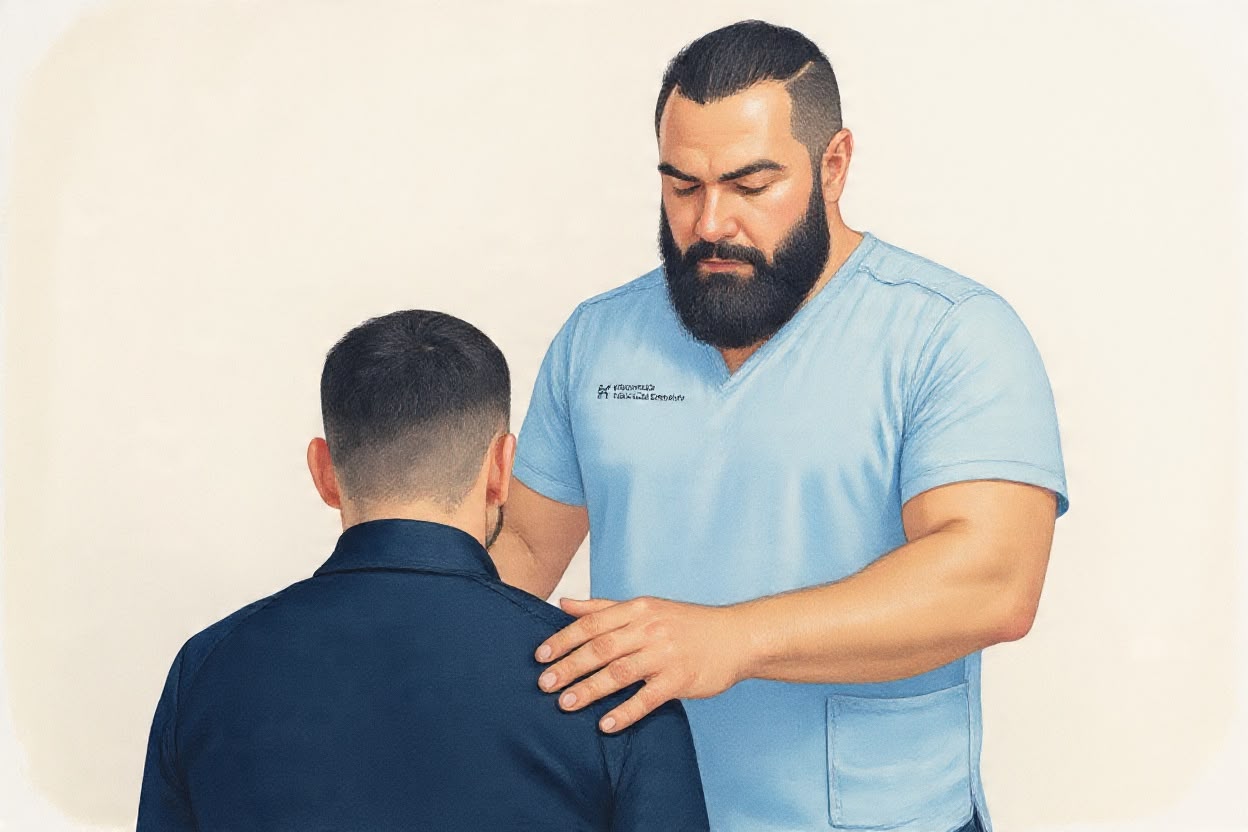
The neck is a stack of small joints wrapped in muscle, and it is normal for one side to become irritated while the other stays fine. A slightly awkward sleeping position, a long stretch at a screen with your head turned, a cold draught, or simply an unlucky movement can leave the joints and muscles on one side stiff and guarded. This is often called acute wry neck, and while it feels alarming, it rarely reflects anything serious. The NHS page on neck pain and stiff neck reassures on the common causes.
If poor sleep is feeding the tension, our article on how pain and stress affect your sleep is worth a read.
Most one-sided neck pain needs nothing more than time and movement. Get it assessed if it is not easing after a week or two, if pain travels down the arm with pins and needles or weakness, or if it follows a significant injury. Seek urgent care for neck pain with fever, severe headache or feeling generally unwell.
The assumption behind a one-sided neck that keeps flaring is that it will settle by itself, because it always has before. At PhysioHub in Uckfield people tend to book on the third or fourth round of that cycle, once the gaps between flares have started getting shorter.
The flares settle because irritated neck joints calm down given time, and they return because nothing has changed about what irritated them. A stiff segment on one side, a monitor set slightly off-centre, and neck muscles that run out of endurance across a working day will reproduce the same catch every few weeks more or less indefinitely. Hands-on treatment restores the movement and takes the edge off quickly, which is the part people come for. Deep neck and upper back endurance work is what lengthens the gaps between episodes until the pattern stops being one.
Our neck pain page explains what that treatment involves.
Is a sore right-side neck ever serious?
Rarely. The warning signs are arm weakness or numbness, or neck pain with fever or severe headache. Otherwise it is almost always muscular or joint-related.
Should I rest it in a collar?
No. Gentle movement recovers far faster than immobilising the neck.
PhysioHub – Empowerment through Evidence-Based Education.
Every body is different. Book a thorough assessment and get advice that is specific to you and your goals.
Book an Appointment