
Creatine spent thirty years being sold to men in gyms, and it has spent the last two or three being discussed in women's health: perimenopause, bone density, mood, and holding on to muscle through the decade when it starts to go. Some of that shift is supported by research and some of it is running ahead of it. The strength and exercise evidence in women is solid, the dose is small, and the safety record over decades is good. The claims about mood, sleep and brain function are early. Here is where the line currently sits.
The muscle and balance that creatine supports are the same ones that decide fracture risk, which is the subject of PhysioHub's guide to falls prevention.
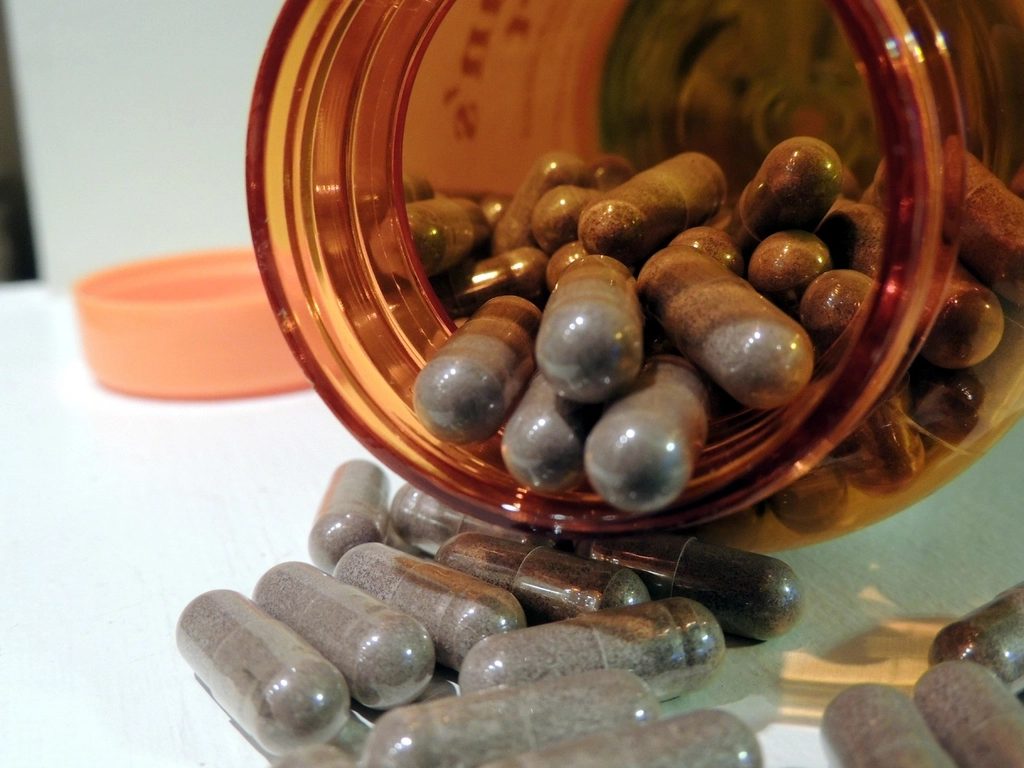
Creatine is made in the body from amino acids and taken in from red meat and fish. It is stored in muscle as phosphocreatine, where it regenerates ATP during short, hard efforts: a set of squats, a sprint, a flight of stairs taken quickly. Supplementing raises the amount stored, which allows slightly more work before fatigue. Over months of training, that extra work accumulates into more strength and more muscle.
It does not act as a hormone, and it has no relationship to anabolic steroids beyond both being used by people who lift weights.
Women have roughly 70 to 80% lower endogenous creatine stores than men, a difference reported in the 2021 Nutrients review of creatine supplementation in women's health by Smith-Ryan and colleagues, which examined the evidence across the female lifespan.
Dietary intake is also typically lower, since creatine comes mainly from meat and fish. Together these mean many women start further from saturation, and the same supplement dose has more room to work.
The review's conclusions were straightforward for the exercise outcomes. In pre-menopausal women, creatine supplementation appears effective for improving strength and exercise performance. In post-menopausal women, higher doses combined with resistance training showed favourable effects on skeletal muscle size and function, and favourable effects on bone when paired with resistance training. Long-term use was well tolerated across the lifespan.
The important clause in all of that is "combined with resistance training". Creatine improves the quality of the training stimulus. Taken without one, it has very little to act on.
3 to 5g of creatine monohydrate a day, taken at whatever time is easiest to remember, continued indefinitely. Muscle stores reach saturation in three to four weeks at that dose.
A loading phase of about 20g a day split into four doses for five to seven days reaches saturation faster and is entirely optional. It is also the phase that causes most of the stomach upset people report, so skipping it is reasonable unless there is a competition date driving the timeline.
Some of the post-menopausal research used higher doses, around 0.3g per kilogram of body weight per day, which is roughly 20g for a 68kg woman. Those doses were used in specific trial settings with resistance training alongside. For general use, 3 to 5g remains the sensible daily amount.
Form: creatine monohydrate. The pricier versions have not outperformed it. There is no need to cycle on and off, and no need to take it with sugar or immediately after training.
This is the question that stops most women trying it, so it deserves a direct answer.
Creatine draws water into muscle cells. In the first week or two that typically shows on the scales as about 0.5 to 1.5kg, and the increase is intracellular rather than under the skin. The visible effect on the body is if anything the opposite of bloating: muscle holding more water looks fuller rather than puffier.
The subcutaneous water retention that causes a puffy appearance is a different mechanism, and creatine does not cause it. Digestive discomfort is possible, and it is largely confined to large loading doses taken on an empty stomach, which is another argument for skipping the loading phase.
Bone. The most promising signal, and the one with the clearest mechanism. Favourable effects on bone have been reported in post-menopausal women taking creatine alongside resistance training, with the plausible route being that better-quality training produces greater mechanical loading, which is what bone actually responds to. Taken on its own, without the training, creatine has yet to show that effect.
Brain and mood. The brain uses phosphocreatine too, and supplementation raises brain creatine content. Trials on cognition, mood and sleep deprivation exist and some are encouraging, particularly under sleep deprivation and in low-meat diets. The evidence base is small, the doses used are often higher than 5g, and it is too early to promise a result. Worth watching rather than worth buying it for.
Pregnancy and breastfeeding. Research is ongoing and not yet sufficient to recommend supplementation. Discuss it with a midwife or GP rather than acting on a review article.
The menstrual cycle and menopause. Interest here is genuine and the research is active. Current evidence supports the strength and muscle outcomes; the cycle-phase claims are still exploratory.
Creatine monohydrate is among the most studied supplements in existence, with decades of trials at 3 to 5g a day and no consistent evidence of harm in healthy adults. Kidney function is the recurring worry, and it comes from a measurement artefact: creatine raises blood creatinine, which is the marker used to estimate kidney function, without kidney function having changed. Tell your GP you take it if you are having bloods done, so the result is read correctly.
Anyone with existing kidney disease, anyone taking medication that affects the kidneys, and anyone pregnant or breastfeeding should take advice before starting. As with any supplement, choose a product that has been batch-tested by an independent scheme.
For women past 50 the strongest evidence for creatine sits alongside resistance training, and it comes from trials in older adults of both sexes. A 2017 meta-analysis in the Open Access Journal of Sports Medicine pooled 22 trials with 721 older men and women and found creatine taken during resistance training added about 1.4kg of lean tissue and more upper and lower body strength than training alone.
That matters most where muscle is being rebuilt: after a fracture, a joint replacement, or months of doing less because of pain. Creatine does nothing without the training, so it belongs once a rehab programme has moved on to genuine strength work, usually a few weeks in, at the same 3 to 5g a day. Anyone with kidney disease, or taking medication that affects the kidneys, should check with a GP first.
Our guide to rehab for seniors covers how that strength work is built up safely, and our review of the best supplements for muscle growth sets creatine against the other options.
What does creatine do for women?
It increases the creatine stored in muscle, which allows slightly more work in short, hard efforts. Alongside resistance training it improves strength and exercise performance, and in post-menopausal women it has shown favourable effects on muscle size and function.
How much creatine should a woman take?
3 to 5g of creatine monohydrate a day, taken at any time. A loading phase is optional and is where most of the stomach upset comes from.
Will creatine make me bulky or bloated?
It draws water into muscle cells, which usually shows as about 0.5 to 1.5kg on the scales in the first fortnight. That water sits inside the muscle rather than under the skin, so it does not cause a puffy appearance.
Does creatine help with menopause symptoms?
The strength and muscle evidence is reasonably solid. The claims about mood, sleep and cognition are early-stage research and are not yet a reason to take it.
Do I need to take creatine on rest days?
Yes. The point is keeping muscle stores saturated, so take the same dose every day.
Is creatine safe long term?
It is one of the most studied supplements available, with no consistent evidence of harm in healthy adults at 3 to 5g a day. Check with your GP first if you have kidney disease, and mention it before a blood test, since it raises creatinine readings.
PhysioHub – Empowerment through Evidence-Based Education.
This sits alongside rather than inside the clinical work PhysioHub does. More about Alex and how he approaches supplements and strength training is on the about page.