
Booking your first physiotherapy appointment is easy. Knowing what actually happens once you get there is the bit that makes people nervous, so here's a straightforward walkthrough of what to expect, from what to bring to what happens after you leave.
How many of those sessions it usually takes is answered in PhysioHub's guide to how long physiotherapy takes to work.
Every clinic runs slightly differently, but the shape of a good first appointment is fairly consistent, and it's worth knowing so you can get the most out of it.
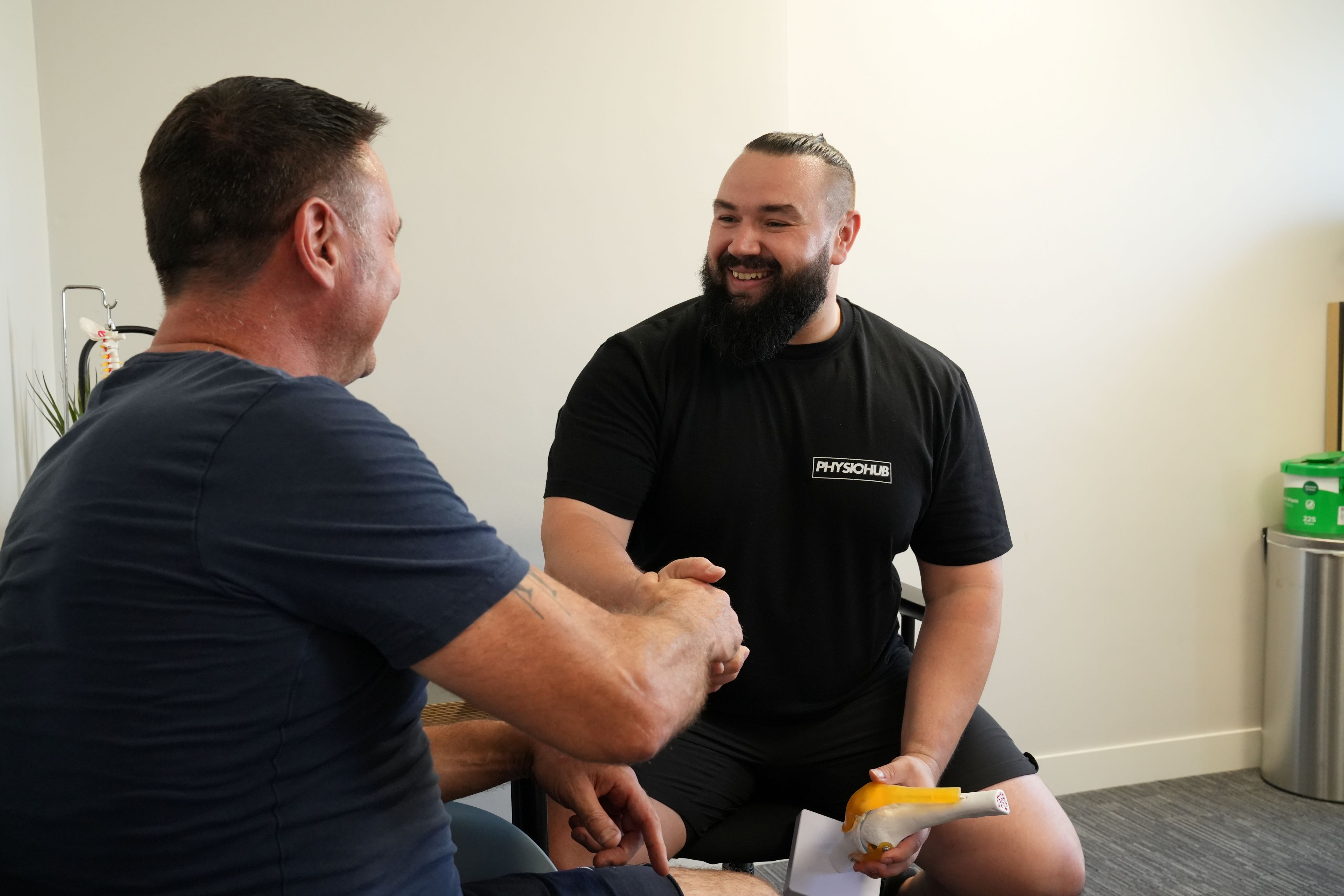
You don't need to prepare much, but a few small things make the session run more smoothly. Wear or bring clothing that lets you move the affected area freely: shorts for a knee or hip problem, a loose top or vest for a shoulder or back issue. If you've had any relevant scans, X-rays or letters from a GP or consultant, bring copies or have them ready to send over, though as we've written about before, you don't necessarily need a referral to book in the first place.
It also helps to have a rough timeline in your head: when the problem started, what you were doing at the time (if anything), and what makes it better or worse. You don't need to write an essay, just be ready to talk it through.
A first appointment usually starts with history-taking, a conversation about your symptoms, how and when they started, your general health, your work and activity levels, and what you're hoping to achieve. This is often where a physiotherapist starts narrowing down what's actually going on, well before any hands-on testing begins.
From there, the physical assessment typically includes movement testing (how far and how well the affected area moves), strength testing, and functional tests relevant to your goals, for example a squat if your knee hurts during exercise, or a reach overhead if it's your shoulder. Many physiotherapists also use hands-on assessment: feeling for tenderness, muscle tone, joint mobility and swelling to build a fuller picture alongside what you've told them.
Once the assessment is done, a good physiotherapist explains what they think is going on in plain language: what's likely contributing to your symptoms, and why. You should leave this part of the appointment understanding your problem better than when you arrived, even if the diagnosis isn't a single, tidy label.
That's worth flagging, because a lot of people expect a precise diagnosis before treatment can start, and that's not always how musculoskeletal problems work. If that's a concern for you, it's worth reading do I need a clear diagnosis to get better?. In short, no, and a physiotherapist is trained to screen for anything that would need a different pathway first.
Most first appointments end with the start of a treatment plan rather than a passive experience. That usually means some initial exercises tailored to what's been found, clear advice on what to do and avoid in the short term, and an outline of what ongoing treatment might look like: how many further sessions are likely to help, roughly how often, and what progress should look like along the way.
You should leave with something concrete to do before your next visit, not just a diagnosis to sit with.
A first physiotherapy appointment typically runs longer than follow-up sessions, since it covers history-taking, assessment, explanation and planning all in one visit, so expect somewhere in the region of 45 minutes to an hour, though this varies by clinic. Follow-up appointments are usually shorter, since they build on the plan already in place rather than starting from scratch.
Afterwards, you'll generally be given a rough sense of your next steps, whether that's a follow-up appointment, a home exercise programme to work through independently for a few weeks, or in some cases a referral onward if something needs a different kind of input.
People arrive for a first physiotherapy appointment with wildly different expectations, usually shaped by whatever they last experienced: a ten-minute slot, a massage, or nothing at all. Alex built PhysioHub around a 60-minute first appointment because the shorter formats leave no room to actually work out what is wrong.
An hour changes what is possible in the room. It covers a full history, which is where most of the diagnosis is made, then physical testing of movement, strength and the structures that hurt, then an explanation in plain language, then treatment on the same day rather than at a second appointment. Nothing painful gets sprung on you and you can stop or ask a question at any point. The practical difference is that you leave knowing what is wrong and holding a plan for the next few weeks, instead of leaving with an appointment card and the questions you walked in with.
When you are ready, book your first appointment.
Will treatment start on the first visit?
Usually yes, in some form: often initial exercises or advice, and sometimes hands-on treatment where appropriate, alongside the assessment itself.
Do I need to bring anything specific?
Comfortable clothing that allows movement of the affected area, and any relevant scan results or letters if you have them. Nothing else is essential.
What if I'm not sure physiotherapy is the right first step?
A good physiotherapist will tell you clearly during your assessment if something needs a different pathway, such as a GP or specialist review, rather than treating you regardless.
PhysioHub – Empowerment through Evidence-Based Education.
Every body is different. Book a thorough assessment and get advice that is specific to you and your goals.
Book an Appointment