
The operation itself is short, often around twenty minutes under local anaesthetic. What people underestimate is the gap between "the numbness has gone" and "my hand works again", which is where most of the frustration after carpal tunnel release lives. Here is a realistic timeline and what rehabilitation adds at each stage.
The non-surgical options worth trying first are reviewed in PhysioHub's look at shockwave therapy for carpal tunnel syndrome.
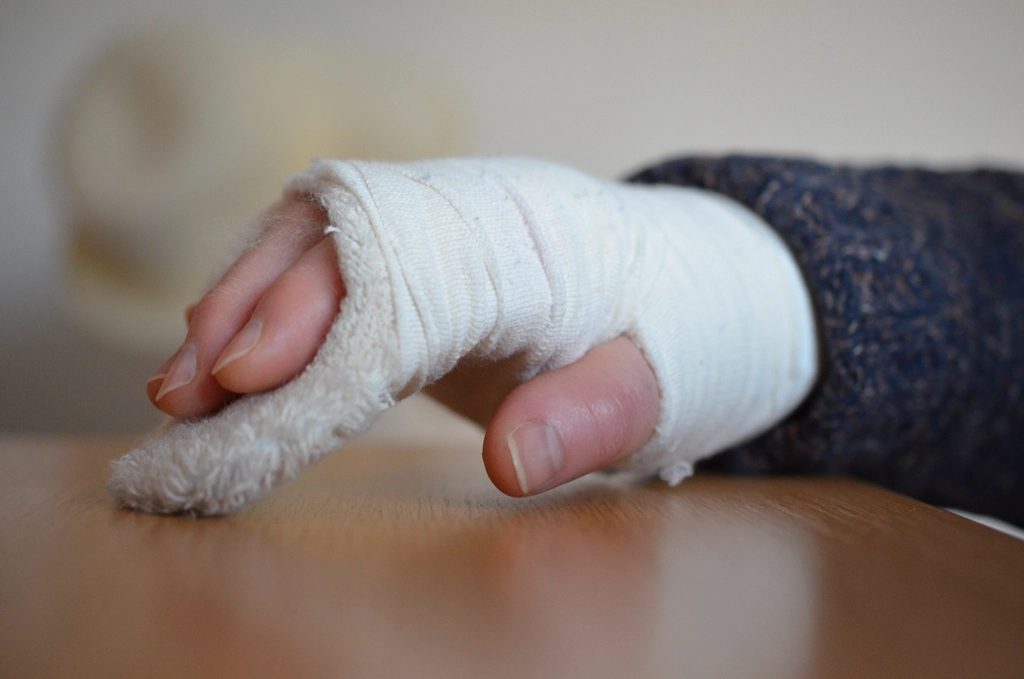
Carpal tunnel syndrome is compression of the median nerve where it passes under a band of ligament at the front of the wrist. A carpal tunnel release divides that band so the tunnel opens and the pressure on the nerve drops. It is usually a day case under local anaesthetic, and the NHS describes the procedure as taking around 20 minutes, with no overnight stay.
Two things follow from that. Night-time tingling and the burning pain that wakes people at 3am often settle very quickly, sometimes within days, because the mechanical compression has been removed. Strength, grip endurance and fine dexterity are a separate question. Muscle that has been under-used for months and a nerve that has been compressed for longer both recover on their own timescale, and neither is fixed by the incision.
Where the nerve has been compressed severely and for a long time, some numbness in the fingers can be permanent. That is worth knowing before surgery rather than after, because it changes what counts as a good result.
Broad timelines from the British Society for Surgery of the Hand and standard NHS post-operative advice look like this. Individual recovery varies, so treat these as a map rather than a schedule.
Return to work depends far more on what the job asks of the hand than on the operation. Desk work is often two weeks or less. Bricklaying, hairdressing, care work and anything involving vibrating tools commonly needs six weeks or more, and rushing that is the most common cause of a painful, unhappy scar.
Be honest about the evidence here. A Cochrane review of rehabilitation following carpal tunnel release found the evidence for any single post-operative intervention to be limited and of low quality, with no strong case that routine therapy improves outcomes for every patient. Most straightforward releases in healthy hands do well with good advice and time.
That is a reason to be selective, not a reason to do nothing. Rehabilitation earns its place where recovery has stalled or where the hand has a job to get back to:
Carpal tunnel is one of the conditions where the question before surgery is often whether surgery is needed at all. NICE guidance supports trying conservative management first in mild to moderate cases, which usually means a night splint holding the wrist in neutral, activity and load modification, and a corticosteroid injection where symptoms justify it.
Where that conservative route still has room to run, our page on wrist and hand pain sets out how the cause is pinned down and what the loading plan looks like.
If an operation is already booked, the useful preparation is simple. Keep the hand and forearm moving and reasonably strong, sort out the workstation or the tool grip that is contributing, and get the other arm and the neck checked, because symptoms that are partly coming from the neck will not be improved by wrist surgery. Our article on neck-related arm symptoms covers how those get separated.
It is also worth arranging the practical side. One hand out of action for a fortnight is harder than people expect if you live alone, drive to work or care for someone.
Most recoveries are uneventful. Contact the surgical team promptly if you notice:
None of these are common, and all of them are easier to manage early.
The question that arrives in the room most often is not about the surgery. It is "why is my hand still weak six weeks later, when the surgeon said it went perfectly?" In East Sussex the surgical route commonly runs through the East Sussex MSK Community Partnership, which triages musculoskeletal referrals across the county and can be reached by self-referral for physiotherapy. What that pathway is set up to deliver is assessment and a decision. Structured follow-up for the months afterwards is a different job.
The answer to the six-week question is usually straightforward. The nerve stops being compressed the day the ligament is divided, and grip strength follows a slower biological curve that runs for roughly three months, longer if the hand was weak beforehand. Sudden full use at week three produces a sore scar and a setback, and doing almost nothing produces a stiff hand that struggles at week ten. The work is finding the middle, measuring grip so progress is visible rather than felt, and rehearsing the specific tasks the hand has to return to.
If you have a release booked or behind you, pre and post-surgical rehabilitation is the part of the service built around exactly that.
How long does carpal tunnel surgery itself take?
Typically around 20 minutes as a day case under local anaesthetic. You are awake, and you go home the same day.
When can I drive again?
Once you can grip the wheel and perform an emergency stop without hesitation, which is commonly one to two weeks. Check your insurer's wording, since some policies are specific about post-operative driving.
Will the numbness definitely go?
Night symptoms usually improve fast. Long-standing, severe compression can leave some permanent numbness, which is why waiting years before treatment tends to produce a less complete result.
Do I need physiotherapy after carpal tunnel release?
Not everyone does. It is worth arranging if your grip is not returning, the scar stays painful, the hand is stiff, or your job places heavy demands on it.
Can both hands be done at once?
Some surgeons will, but it leaves you without a working hand for a period. Most people manage better having them done in sequence.
PhysioHub – Empowerment through Evidence-Based Education.
Every body is different. Book a thorough assessment and get advice that is specific to you and your goals.
Book an Appointment