
Hamstring stretches are the most handed-out exercise in physiotherapy, and the most frequently done in a way that changes very little. Five variations cover almost every situation, and each one asks for the same thing: the pelvis tipping forward, the back staying flat, and a steady hold rather than a bounce. Below are the five, the dose that produces a change, what the evidence says stretching does, and the hamstring problems that stretching quietly makes worse.
Which of the three causes of hamstring pain you are dealing with is worked through in PhysioHub's guide to hamstring pain.

Five variations, covering the positions most people can actually get into. Work both legs, and aim for a firm pull down the back of the thigh that eases while you hold it. Sharp pain, pins and needles or a pull that keeps building means back off.
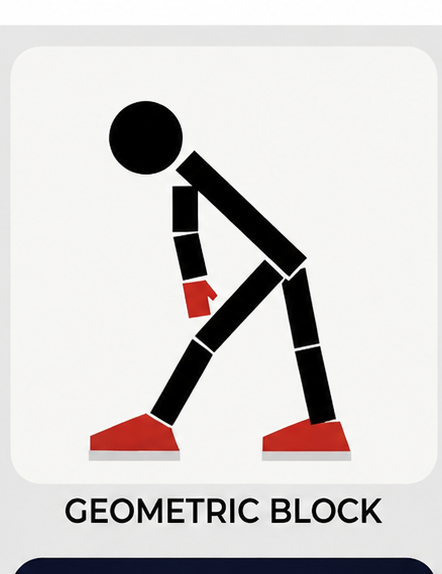
Hamstring stretch
Place the heel on the floor in front of you with the knee straight, then tip the pelvis forwards. Keeping the back flat, lean forwards until the hamstring stretches. Hold.
SETS & REPS: 30sec holdFREQUENCY: 2-3 x day
Hamstring stretch
Rest the heel on a knee-height table or chair with the knee straight and tip the pelvis forwards. Holding the back flat, lean forwards until the hamstring stretches. Hold.
SETS & REPS: 30sec holdFREQUENCY: 2-3 x day
Hamstring stretch
Lie on your back with one leg flat. Lift the other as far as it will go with the knee straight, take hold behind that knee and draw the leg towards you until the hamstring stretches. Hold.
SETS & REPS: 30sec holdFREQUENCY: 2-3 x day
Hamstring stretch with towel
Lie on your back with both legs straight, loop a towel or resistance band over one foot and lift that leg as far as it will go. With the knee held straight, pull on the towel or band to deepen the stretch. Hold. Tensing the quadriceps at the same time lets the hamstring release further.
SETS & REPS: 30sec holdFREQUENCY: 2-3 x day
Knee hug with hamstring stretch
Lie on your back and draw one leg up as far as it will come, taking hold behind the knee and pulling the hip further into flexion until the buttock stretches (1). From there, straighten the knee under your own power until the hamstring stretches (2). Hold.
SETS & REPS: 30sec holdFREQUENCY: 2-3 x day
The pelvic tilt in the first two is what makes them work; rounding the spine forward instead moves the stretch into your lower back. The last one combines hip flexion with knee extension, which makes it the strongest of the five and the one to leave out if your pain sits high, right under the sitting bone.
Thirty-second holds, two to three times daily, is a sensible working dose and matches standard practice. Longer single holds add little; the total weekly time spent stretching predicts range gains better than the length of any one hold.
Expect two to three weeks of consistent daily work before the range visibly shifts, and expect it to drift back within a few weeks of stopping. That is worth knowing before you judge whether stretching is working for you, because a fortnight of on-and-off effort will look like failure whatever the underlying problem is.
The honest answer is that a stretched hamstring mostly becomes more tolerant rather than longer. A well-known review in Physical Therapy examined the mechanism behind range gains from stretching and concluded that the improvements come from a change in the sensation of stretch rather than a lasting change in muscle length. Your nervous system permits more range at the same tissue tension. That is a real and useful gain if range is what limits you, whether that is reaching your feet, driving a squat deeper, or getting your leg through in a stride.
Where stretching earns less than its reputation is injury prevention. A 2014 meta-analysis in the British Journal of Sports Medicine pooled randomised trials of prevention programmes and found strength training cut overuse injuries by roughly half, while stretching programmes produced no significant reduction in injury rates. For hamstrings specifically, a 2019 review of 8,459 athletes found that including the Nordic hamstring exercise in a prevention programme halved hamstring injury rates. Stretching keeps you comfortable and mobile; strength through the lengthened range is what keeps the muscle intact at speed.
Stretching earns its place in some situations and holds you back in others. Our guide to hamstring pain and injury treatment sets out what each of the three common patterns responds to, and these are the three situations where the stretches above are the wrong tool:
Long static holds immediately before sprinting or jumping can blunt power for a short period afterwards. A 2016 systematic review in Applied Physiology, Nutrition, and Metabolism found the performance cost is small and largely confined to holds beyond 60 seconds, and that short static stretches inside a full warm-up that also includes dynamic work carry no meaningful penalty.
The practical version: keep leg swings, walking lunges and gradually faster strides for the warm-up, and save the 30-second holds for after training or a separate time of day. If you already stretch before you run and it feels right, keeping the holds brief and following them with something dynamic settles the issue.
Hamstrings fail during the late swing phase of sprinting, while the muscle is lengthening under high force. Training that specific quality is what shifts the risk: Nordic curls, Romanian deadlifts, single-leg hinges and eccentric slider curls, built up gradually over weeks. Two sessions a week is enough for most people. Our round-up of injury prevention exercises puts this alongside the rest of the posterior-chain work, and if you run, knee pain when running covers how the same load-management principles apply further down the leg.
How often should I stretch my hamstrings?
Two to three times a day, 30-second holds, on both legs. Daily consistency matters more than the length of any single hold.
How long until my hamstrings feel looser?
Most people notice a change within two to three weeks of daily stretching. The gain fades over a few weeks if you stop, so it needs to become a habit.
Should I stretch a sore hamstring?
It depends where the soreness is. Mid-muscle tightness usually tolerates gentle stretching well; pain under the sitting bone is often made worse by it.
Is bouncing into the stretch better?
Steady holds are easier to control and cause less irritation. Bouncing offers no clear advantage for range.
Why do my hamstrings feel tight even though I stretch every day?
Tightness that will not shift after weeks of daily stretching often comes from somewhere other than muscle length: referred sensitivity from the lower back, a neural component, or a tendon under compression. That is worth having assessed.
PhysioHub – Empowerment through Evidence-Based Education.
Where stretching changes nothing after a few weeks, the tendon or the lower back is usually driving the sensation, which our guide to hamstring pain works through.