
A hip replacement reliably takes away arthritic hip pain. Getting back your strength, your walking pattern and your confidence on stairs is the part that depends on rehab. Here is what each stage of hip replacement recovery involves, what is realistic at each point, and where physiotherapy makes the biggest difference.
The equivalent timeline for the other big lower-limb joint replacement is in PhysioHub's guide to knee replacement rehab.
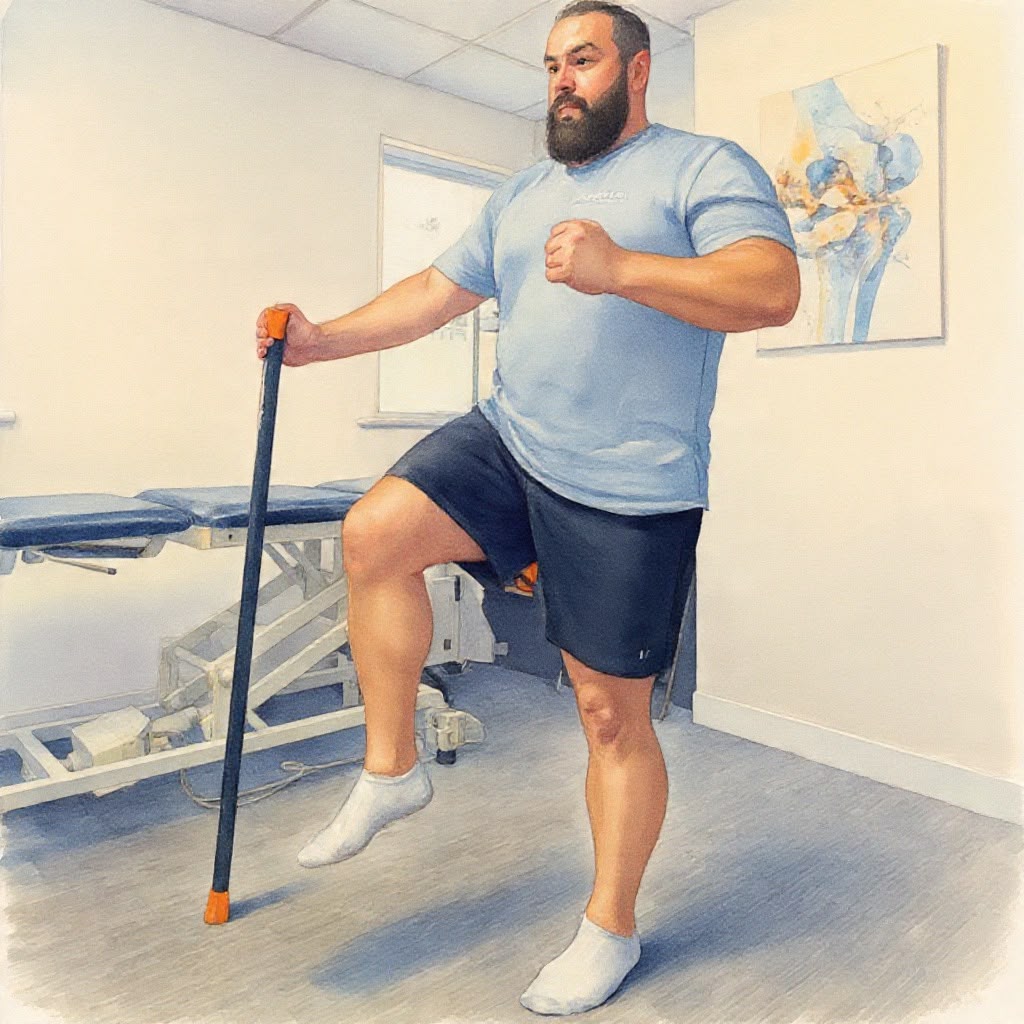
Strength before the operation predicts function after it. The muscles around an arthritic hip, especially the gluteals and quadriceps, are usually weak on that side after months or years of limping and avoiding load. Rebuilding some of that capacity in the weeks before surgery means you start rehab from a higher base.
NICE recommends that people having a hip or knee replacement are given preoperative rehabilitation advice, including the exercises to do before and after surgery, weight management and how to keep their independence around the operation (NICE NG157). Practically, that means sit-to-stands, supported step-ups, gentle hip abduction work and upper body strength for crutches, plus a rehearsal of how you will manage stairs, washing and getting into bed at home.
Modern hip replacement care gets you moving fast. NICE recommends that rehabilitation is offered on the day of surgery where possible and within 24 hours at the latest. The NHS notes that most people who are otherwise fit go home around 1 to 3 days after the operation, walking with crutches or a frame.
The goals in the first week are simple and important: walk short distances several times a day, work on straightening and bending the hip within whatever precautions your surgeon has given you, keep the ankle pumping for circulation, and manage swelling with elevation and ice. Pain and swelling in the leg and foot are normal at this stage and usually settle over a few weeks.
This block is about quality of movement rather than distance. Most people progress from two crutches to one, then to none, guided by whether the limp disappears rather than by the calendar. A physiotherapist watches for the classic compensations: a short step on the operated side, the trunk swinging over the hip, or the pelvis dropping because the gluteus medius is not firing.
Typical milestones during this period are walking around the house and garden without aids, managing stairs one at a time then reciprocally, and building up outdoor walks a few minutes at a time. The NHS advises waiting at least 6 weeks before driving and says most people return to work around 6 weeks, with a follow-up appointment usually at 6 to 12 weeks.
Walking alone will not restore hip strength. From around six weeks, once the surgical site is comfortable, rehab shifts to progressive loading: sit-to-stands to a lower seat, step-ups and step-downs, split squats within comfort, hip abduction work with bands or cables, and single-leg balance for the control you need on uneven ground.
Load has to increase for muscle to adapt, so the exercises should feel challenging by the last few repetitions. This is the stage where people who stop at the hospital exercise sheet plateau, and where supervised strength work changes the outcome. Our page on how long physiotherapy takes to work explains why measurable change usually needs several weeks of consistent loading.
By three months most people walk normally, sleep comfortably and manage daily life without thinking about the hip. The remaining year is about capacity: longer walks and hills, cycling, swimming, golf, gardening, dancing, gym work and carrying grandchildren. Strength on the operated side often lags the other leg well beyond the point where pain has gone, which is why testing both sides matters.
Most surgeons are happy with low-impact sport and many are comfortable with graded running for suitable patients, though this varies by implant, bone quality and surgeon preference, so follow the advice you have been given. If you are returning to something demanding, returning to sport after injury covers how to stage that safely.
UK private hospital admissions reached a record for the fourth consecutive year in 2025, and hip replacement stays among the three procedures people most often pay for themselves, according to PHIN's market data. A lot of thought goes into choosing the surgeon and the hospital. Far less goes into what happens in the six months afterwards, which is the part that decides how the hip actually feels.
The operation itself is reliable. A limp that is still there at six months usually traces back to gluteal strength that was already low before surgery and that nothing has systematically rebuilt since, while the implant does its job perfectly well. Most people leave hospital with a sheet of exercises and nobody checking whether the strength difference between sides has closed. Testing both hips, watching how you genuinely walk rather than how you walk when watched, and progressing load against those measurements is what turns a good operation into a hip you stop thinking about.
If surgery is still a decision rather than a date, our osteoarthritis page sets out what the alternatives actually involve.
How long until I walk without crutches?
Commonly two to six weeks, though it depends on your strength before surgery, your surgical approach and your confidence. The measure that matters is walking without a limp, so a physiotherapist would rather you keep one crutch a little longer than practise a limp.
Is it too late to start rehab if my operation was months ago?
No. Muscle responds to loading at any point after surgery, and late-stage strength and balance work regularly improves walking, stairs and confidence in people who are a year or more post-operative.
Will I set off the hip if I push too hard?
A well-fixed replacement is robust, and the usual limit is soreness rather than danger. Graded progression with guidance keeps you moving forward without the flare-ups that stall people.
PhysioHub – Empowerment through Evidence-Based Education.
Every body is different. Book a thorough assessment and get advice that is specific to you and your goals.
Book an Appointment