
The five lat exercises worth building a back session around are the pull-up, the lat pulldown, the single-arm dumbbell row, the barbell bent-over row and the straight-arm pulldown. The pull-up produces the highest measured latissimus dorsi activity of any of them. Where a full pull-up is still out of reach, the lat pulldown trains the same overhead pattern at a load you choose.
Pulling loads the shoulder as much as it loads the back, and the ache that follows a few months of heavy pull-ups often turns out to be a shoulder problem, which is the subject of PhysioHub's guide to front shoulder pain.
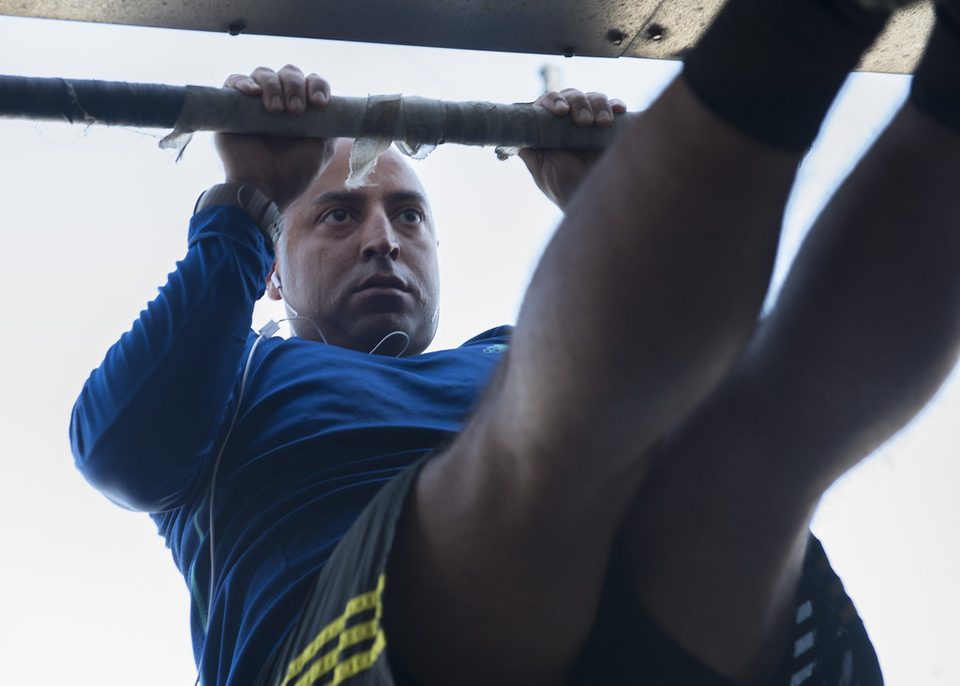
Two of the five need a bar, two need a cable machine, and one needs a single dumbbell and a bench. They are ranked on how much latissimus dorsi work they produce, how far the load can be progressed, and how many people can perform them well.
| Exercise | Best for | What makes it stand out | Dose |
|---|---|---|---|
| 1. Pull-up | Maximum lat demand | The highest measured latissimus dorsi activity of any back exercise | 4 × as many as you can control |
| 2. Lat pulldown | Overhead pulling at a chosen load | Trains the pull-up pattern below bodyweight | 3 × 8–12 |
| 3. Single-arm dumbbell row | Loading one side at a time | Heavy lat work with the spine supported by the bench | 3 × 8–12 each side |
| 4. Barbell bent-over row | Total loadable back work | Trains the lats and the back extensors in one movement | 3–4 × 6–10 |
| 5. Straight-arm pulldown | Isolating the lat | Removes the arms from the equation entirely | 3 × 12–15 |
This is a documentary review of published biomechanics and clinical evidence rather than a laboratory test run by us. Around a dozen commonly recommended back exercises were considered, including the pull-up, chin-up, lat pulldown in three grips, seated cable row, barbell row, single-arm dumbbell row, inverted row, straight-arm pulldown, dumbbell pullover and the machine row.
Four criteria decided the order: measured latissimus dorsi activity in electromyography studies, how far the exercise can be loaded and progressed over months, the demand it places on the lower back for the lat work it returns, and how many people can perform a version of it today.
The sources read were Youdas and colleagues' 2010 electromyographic study of the pull-up and chin-up in the Journal of Strength and Conditioning Research, published comparisons of the chin-up against the lat pulldown, and the NHS physical activity guidelines for adults. Evidence checked in August 2026.
What could not be checked: electromyography measures electrical activity during single sets, and no trial has compared these five head to head for the outcome most people want, which is a bigger, stronger back after several months. Treat the ranking as an informed clinical judgement built on the mechanics.
Ask which direction you are pulling. The lats bring the arm down and back towards the body, so they are trained from overhead (pull-ups, pulldowns) and from in front (rows). A back session that only rows leaves the overhead direction untrained, and a session that only pulls down leaves the horizontal one untrained. Most good programmes carry one of each.
Weigh the back extensor cost. A barbell bent-over row asks the lower back to hold a horizontal torso for the whole set, which is useful training in itself and a poor deal on a week when the back is sore. The single-arm dumbbell row gives you most of the same lat work with the trunk supported.
Match it to what your shoulder tolerates. Overhead pulling loads the shoulder near the end of its range. A shoulder that complains there does better starting with rows and a neutral-grip pulldown, then adding the wider grips as the range becomes comfortable.
Pick something you can progress for months. Bodyweight exercises run out of progressions faster than loaded ones, which is why the pulldown and the rows carry most of the long-term work even when the pull-up is the better exercise on paper.
What it is
Hanging from a bar with the palms facing away and pulling until the chin clears it, with the body as the load.
Who it suits
Anyone who can already perform two or three, and anyone willing to build towards one with assisted or negative repetitions. Bodyweight is the limiting factor, so it suits lighter and stronger trainees first.
How to do it
Grip slightly wider than the shoulders, start from a full hang with the shoulder blades relaxed, then set them down and back before the elbows bend. Drive the elbows towards the floor and the ribs, pause at the top, and lower under control over two to three seconds. Four sets of as many as you can control, stopping the set when the tempo collapses.
What the evidence supports
This is the highest measured latissimus dorsi demand available. Youdas and colleagues' 2010 study in the Journal of Strength and Conditioning Research measured 25 volunteers across the pull-up, chin-up and a rotating-handle version, and recorded average latissimus dorsi activity of 117 to 130 per cent of maximum voluntary contraction. Biceps brachii reached 78 to 96 per cent, infraspinatus 71 to 79 per cent and lower trapezius 45 to 56 per cent, so this is a whole upper-back exercise rather than a lat exercise alone.
Limits and cautions
Kipping and jerking off the bottom is the fault that turns a strength exercise into a shoulder problem. Anyone with current shoulder pain at the top of the range should cap the range or use a neutral grip until the pain settles. If a full repetition is out of reach, three sets of slow lowering from the top build the strength within about six weeks.
Time and effort
Six or seven minutes for four sets. It is the most fatiguing exercise on this list and belongs at the start of a session.
Why it made the list
It ranks first on measured demand and on carryover. Everything else here is a way of training the same pattern with the load turned down.
What it is
The pull-up pattern performed on a cable machine, with the thighs anchored and the load selected on a stack.
Who it suits
Almost everyone, and particularly anyone who cannot yet do a pull-up or who needs to accumulate volume without carrying their own bodyweight for every set.
How to do it
Set the thigh pad snug, take a grip a little wider than the shoulders, and pull the bar towards the collarbone while the chest stays lifted and the torso leans back no more than about 20 degrees. Control the bar back up until the arms are straight and the shoulder blades rise. Three sets of 8 to 12.
What the evidence supports
Comparisons between the chin-up and the lat pulldown find similar latissimus dorsi activity in the two exercises, with the differences showing up elsewhere: the biceps work harder in the pulldown and the trunk muscles work harder in the chin-up. For the target muscle, the machine version holds its own.
Limits and cautions
Leaning back until the movement becomes a row is the usual drift, and it happens as soon as the weight is too heavy. Pulling behind the neck puts the shoulder in its least stable position for no extra lat activity, so keep the bar in front. Anchoring the thighs properly matters more than it looks, because a rising body turns the set into a partial repetition.
Time and effort
Five minutes. It recovers quickly enough to appear twice in a training week.
Why it made the list
It is the most useful lat exercise for the most people. The load is adjustable in small steps, the range is easy to standardise, and it is the exercise that builds the strength a first pull-up needs.
What it is
One hand and one knee on a bench, the other hand rowing a dumbbell from arm's length to the hip.
Who it suits
Anyone with a side that is noticeably weaker, anyone whose lower back objects to bent-over barbell work, and anyone training at home with a single dumbbell.
How to do it
Hand and knee on the bench, spine level, the working arm hanging straight down. Row the dumbbell towards the hip rather than the shoulder, letting the shoulder blade travel at the end of the movement, then lower until the arm is straight and the shoulder blade reaches forward. Three sets of 8 to 12 each side.
What the evidence supports
Single-arm rowing produces high latissimus dorsi activity with the trunk supported, which is why it survives in rehabilitation programmes where the barbell row does not. Training one limb at a time also exposes side-to-side differences that a barbell hides, and those differences are worth knowing about in anyone returning from a shoulder or back problem.
Limits and cautions
Rotating the trunk to help the weight up is the common fault and it converts a back exercise into a twisting exercise. If the dumbbell only moves when the shoulder rotates, the weight is too heavy. Wrist and elbow pain usually settles by turning the palm to face the body.
Time and effort
Eight minutes for both sides. It is the exercise here most likely to be done well at home.
Why it made the list
It gives most of the barbell row's lat work without asking the lower back to hold a horizontal position for the whole set, which makes it the row that suits the widest range of people.
What it is
A hip hinge held at roughly 45 degrees or lower while a barbell is rowed to the lower ribs.
Who it suits
People who already hinge well, who have no current back symptoms, and who want the single most loadable pulling exercise available.
How to do it
Feet hip width, knees softly bent, hinge at the hips until the torso is between 45 degrees and horizontal, and brace hard. Row the bar to the lower ribs or navel, pause, and lower under control. Three to four sets of 6 to 10.
What the evidence supports
Bent-over rowing generates high activity across the latissimus dorsi and the mid-back, and it loads the erector spinae isometrically for the duration of every set. That combination is the reason it appears in almost every strength programme and the reason it is the first exercise dropped when a back is irritable.
Limits and cautions
The lower back rounding as the set goes on is the fault that matters, and it appears before most people feel it. Filming one set from the side settles the question faster than any cue. Anyone with current low back pain should use the chest-supported or single-arm version instead until symptoms settle, which is the same principle set out in our guide to back and neck pain together.
Time and effort
Ten minutes with warm-up sets. It needs a proper warm-up and it costs more recovery than anything else here.
Why it made the list
Nothing else on this list can be loaded as heavily, and heavy loading is what drives long-term strength. It ranks fourth because a meaningful minority of people cannot do it safely on any given week.
What it is
Standing at a cable machine and pushing a straight bar or rope from head height to the thighs with the elbows locked.
Who it suits
Anyone whose arms fail before their back, anyone learning to feel the lats working, and anyone whose elbows are sore from heavy curling and rowing.
How to do it
Stand a pace back from the machine, hinge forward slightly, and take the bar at head height with straight arms. Push it down to the thighs in an arc, keeping the elbows locked, then let it return until the shoulders lift. Three sets of 12 to 15 with a light load.
What the evidence supports
Removing elbow flexion from the movement takes the biceps out of the exercise, which is why this is the standard way to train the lat without the arms limiting the set. It trains shoulder extension, the lat's main job, through a long range at a load the shoulder tolerates well.
Limits and cautions
It cannot be loaded heavily, so it works as an addition rather than a replacement. Bending the elbows turns it into a triceps pushdown within two repetitions, which is the fault to watch for. Shoulder pain at the top of the range means starting the movement lower.
Time and effort
Four minutes. It belongs at the end of a session, when the heavy work is done.
Why it made the list
It fills the one gap the other four leave: a way to train the lats hard when the grip, the biceps or the lower back are the reason a session is being cut short.
| Exercise | Main target | Equipment | Lower back load | Shoulder-friendly | Main progression |
|---|---|---|---|---|---|
| Pull-up | Lats, biceps, infraspinatus | Bar | Low | Usually, once settled | Added weight, slower lowering |
| Lat pulldown | Lats, biceps | Cable machine | Low | Yes, front of the neck only | Stack weight |
| Single-arm dumbbell row | Lats, mid-back | Dumbbell and bench | Low | Yes | Heavier dumbbell, paused reps |
| Barbell bent-over row | Lats, mid-back, erector spinae | Barbell | High | Yes | Bar weight |
| Straight-arm pulldown | Lats alone | Cable machine | Low | Yes, shortened range if sore | Slower tempo, small load steps |
The column that changes most programmes is the fourth. Four of these five can be trained through a week when the lower back is sore, which is the opposite of what most back sessions assume.
If you cannot yet do a pull-up, train the lat pulldown twice a week and add three sets of slow lowering from the top of the bar. Most people who do that consistently reach a first repetition within two or three months.
If your lower back is sore this week, use the pulldown and the single-arm row and leave the barbell row out entirely. Nothing is lost; the lats are trained just as hard.
If your shoulder hurts at the top of the range, start with rows, use a neutral grip on the pulldown, and add the wider grips back as the range becomes comfortable. Our guide to rotator cuff rehabilitation covers what to load and in what order.
If you train at home with one dumbbell, the single-arm row is the whole answer, and the bodyweight options cover the rest of the session.
If you have 20 minutes, twice a week, do pull-ups or pulldowns, then single-arm rows, then a light set of straight-arm pulldowns. That covers both pulling directions and finishes the lats off.
A pinch at the top of the shoulder during pull-ups and pulldowns usually comes from the position at the top of the movement rather than from the lats themselves. Three things drive it.
Behind-the-neck pulldowns. Pulling the bar behind the head takes the shoulder into its most exposed position and pushes the head forward. A 2009 electromyography study in the Journal of Strength and Conditioning Research found lat activity was the same whether the bar came to the front or behind the neck, and concluded the behind-the-neck version should be avoided. Pull to the upper chest. Range at the top. If the pinch arrives in the full hang or at full stretch on the pulldown, stop a few centimetres short of it for a few weeks and use a neutral grip, which most irritable shoulders prefer. Neck and upper back tension. Shrugging the shoulders up to the ears and pushing the chin forward on each rep loads the neck and the muscles between the shoulder blades; keep the neck long and start each pull by drawing the shoulder blades down.
An ache that settles between the shoulder blades after rowing is covered in our guide to pain between the shoulder blades, and pain that spreads from the shoulder up into the neck is explained in our article on neck pain from the shoulder. Pins and needles down the arm while pulling is a reason to have it checked before carrying on.
What is the best lat exercise?
The pull-up. In a 2010 Journal of Strength and Conditioning Research study, Youdas and colleagues measured average latissimus dorsi activity of 117 to 130 per cent of maximum voluntary contraction across the pull-up, the chin-up and a rotating-handle version, which is higher than any other common back exercise has recorded. The lat pulldown is the substitute when a full pull-up is out of reach, because it trains the same overhead pulling pattern at a load you set.
Do lat pulldowns work as well as pull-ups?
For the lats specifically, close to it. Studies comparing the chin-up with the lat pulldown find similar latissimus dorsi activity between the two, with the differences appearing in the supporting muscles rather than the lats. The pull-up asks more of the trunk because the body is the load, and the pulldown lets you train below bodyweight, which is what makes it the more useful exercise for most people starting out.
Should I pull to the front or behind the neck?
To the front, at the collarbone. The behind-the-neck pulldown forces the shoulder into full external rotation and abduction at the same time, which is the position of least stability, and it offers no extra latissimus dorsi activity in return. Anyone with a history of shoulder pain, and most people without one, should keep the bar in front.
Does grip width change how much the lats work?
Less than most people expect. Wider grips shorten the range the shoulder travels through and tend to shift work towards the upper back, while a shoulder-width or slightly wider grip lets the elbow travel furthest and loads the lats through the longest range. Grip width is worth varying between blocks of training rather than agonising over.
How often should I train my lats?
Two sessions a week covering 6 to 12 hard sets in total suits most people, which sits inside the NHS advice to do strengthening activity working the major muscle groups on at least 2 days a week. Pulling is easier to recover from than heavy squatting or deadlifting, so a second lighter session is usually well tolerated.
Why do my arms fail before my back?
Usually because the elbows are doing the pulling and the grip is the weakest link in the chain. Two things fix it: thinking about driving the elbows down and back rather than pulling with the hands, and using straps on the heaviest sets so the forearms stop ending the set early. If it persists across every pulling exercise, the load is simply too heavy for the range you are trying to control.
Will lat exercises help my shoulder pain?
Often, though not by stretching or loosening anything. Rotator cuff-related shoulder pain responds to progressive loading, and pulling exercises load the shoulder in a controlled range while building the muscles that position the shoulder blade. The exception is a shoulder that hurts sharply at the top of the movement, which usually means the range needs capping before the load goes up.
PhysioHub – Empowerment through Evidence-Based Education.
Pulldowns and rows that pinch at the top of the shoulder usually need a change of range rather than rest, and our guide to shoulder pain covers what drives that pinch.