
The middle and upper back, the thoracic spine, gets far less attention than the neck or lower back, yet stiffness and aching here are common, particularly with long hours at a desk. Most of it is mechanical and settles well once you understand what is loading the area and how to build its tolerance.
Pain that concentrates between the shoulder blades has its own causes, covered in PhysioHub's guide to pain between the shoulder blades.
The thoracic spine is naturally stiffer than the neck or lower back because the ribs attach there. Prolonged sitting, repetitive lifting, and low endurance in the surrounding muscles are the usual drivers of aching and stiffness. It can also refer up from the shoulder blades or feel linked to the neck, since the regions work together. Long hours in a chair rarely load one region on its own either: the hips stiffen under the same sitting posture and lose the extension the mid-back relies on to stay upright, so where the front of the hip or the groin has started aching alongside it, our guide to hip pain covers what drives that. The NHS page on back pain is a good grounding.
The vast majority of thoracic pain is mechanical. The same holds further down the spine, and our exercises for the first two weeks of back pain show how gentle movement settles a mechanical flare. A small number of warning signs warrant a check: pain that is constant and unrelated to movement or position, night pain that wakes you, unexplained weight loss, feeling generally unwell, or a new severe pain in someone with relevant medical history. If you are wondering whether a scan is needed, do I need a scan, MRI or X-ray for my pain? explains when imaging genuinely helps.
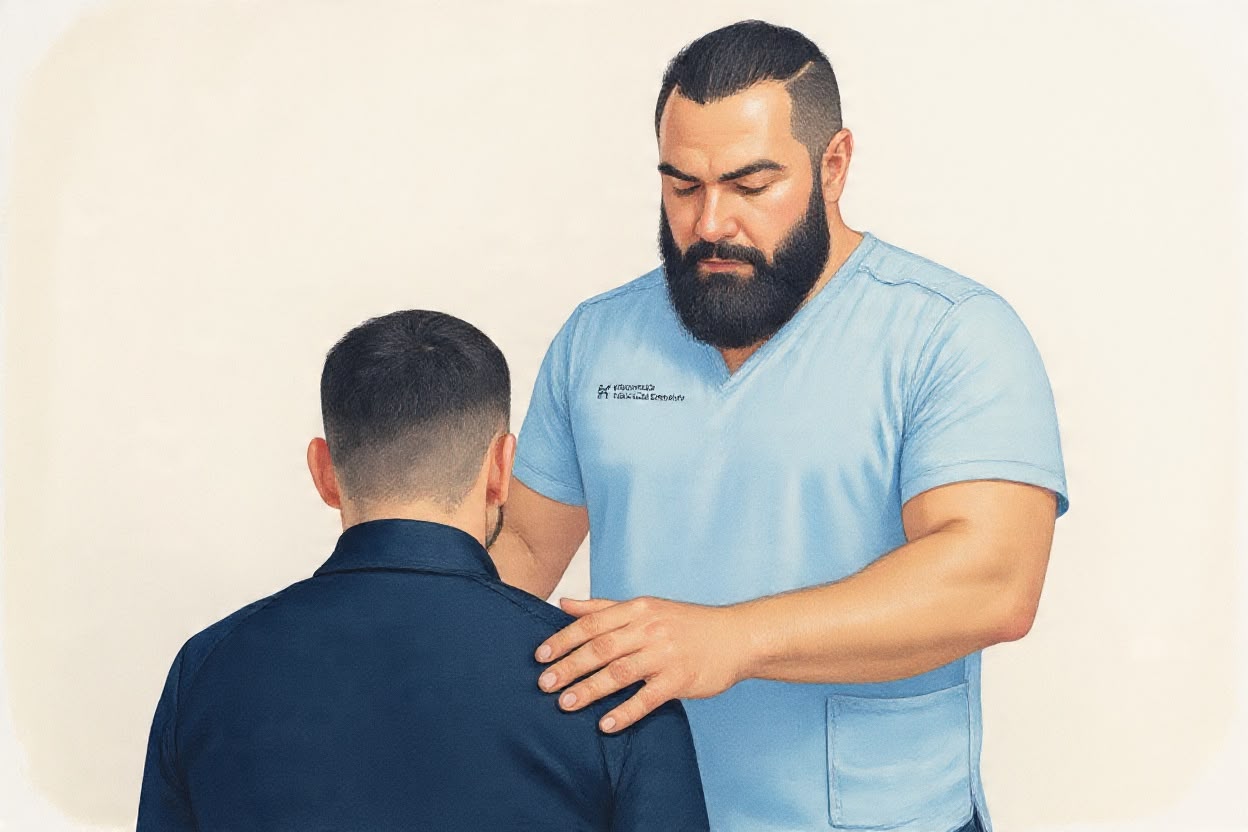
What has changed in the clinic since home working settled in is how much mid and upper back pain now comes through the door, usually after years of being put up with because it is not the lower back and never felt serious enough to mention. Alex kept the assessment slot long partly for presentations like this, since this area rarely explains itself quickly.
The thoracic spine is built more for stability than movement, and it stiffens quietly under sustained positions: a desk, a steering wheel, a baby carried on one hip at three in the morning. Stiffness there loads the neck and shoulder girdle above it, which is why the ache tends to arrive in the afternoon rather than the morning, and why a massage helps for about two days. Restoring thoracic and rib movement takes the edge off it, and building upper back and shoulder girdle strength is what makes the improvement hold through a working week.
Our back pain page sets out how this is approached across the whole spine.
Why is my upper back so stiff?
The thoracic spine is built for stability and is naturally stiffer, and long static postures make it stiffer still. Regular mobility work usually restores comfortable movement.
Can upper back pain come from the neck?
Yes. The neck and upper back share muscles and movement, so problems in one often produce symptoms in the other.
PhysioHub – Empowerment through Evidence-Based Education.
Every body is different. Book a thorough assessment and get advice that is specific to you and your goals.
Book an Appointment