
TENS machines turn up in a lot of patients' bathroom cabinets: bought online, used during a flare-up, then largely forgotten about. They're cheap, easy to use, and genuinely help some people feel more comfortable. What they're not is a cure, and it's worth understanding what they can and can't do before you rely on one.
Where a TENS unit fits into a longer-term plan is covered in PhysioHub's guide to pain management physiotherapy.
Here's what a TENS machine actually does, what the evidence says, how to use one safely, and where it fits alongside proper physiotherapy treatment.
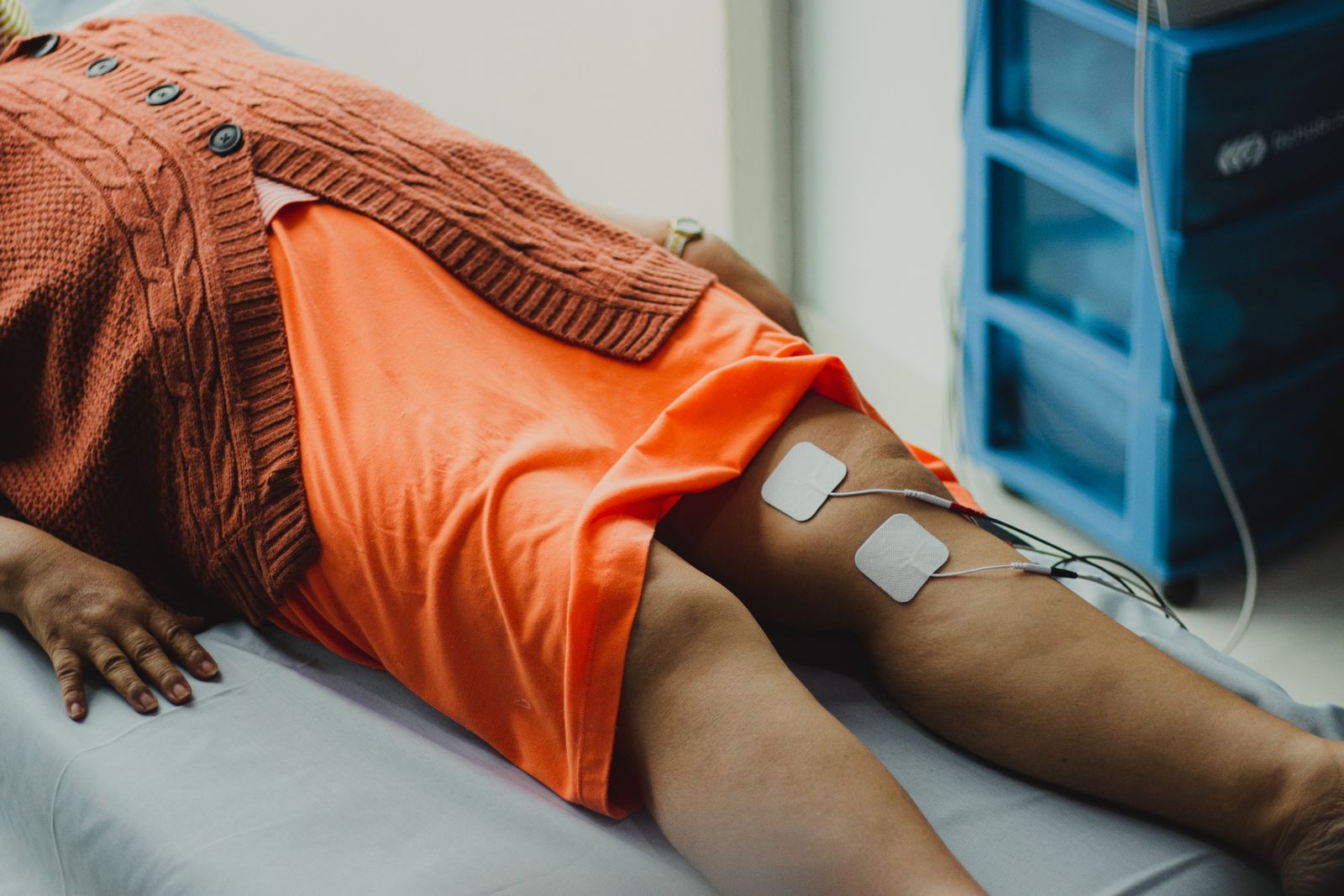
TENS stands for Transcutaneous Electrical Nerve Stimulation. It's a small, battery-powered device connected by wires to sticky pad electrodes, which you place on your skin near or around the painful area. Once switched on, it delivers a mild electrical current that produces a tingling sensation.
The theory behind it is called the gate control theory of pain, first described by Melzack and Wall in the 1960s. In simple terms, the idea is that the electrical stimulation activates large nerve fibres that carry non-painful signals, and these can partially "close the gate" in the spinal cord to the smaller fibres that carry pain signals up to the brain. Some machines also aim to trigger the release of the body's own natural pain-relieving chemicals. The result, for some people, is a genuine reduction in how painful the area feels while the machine is switched on, or for a short time afterwards.
This is the part worth being honest about: the evidence for TENS is genuinely mixed. A 2019 overview of Cochrane reviews looking at TENS for chronic pain found that, while the reviews themselves were well conducted, the underlying evidence was of very low quality, and the authors couldn't conclude with confidence that TENS meaningfully helps pain, disability or quality of life, though they also couldn't conclude that it's harmful (Gibson et al., Cochrane overview, 2019).
NICE's guideline on low back pain and sciatica goes further and specifically recommends against offering electrotherapies, including TENS, for low back pain (NICE guideline NG59). That doesn't mean nobody gets relief from it (plenty of people do, and it's cheap, low-risk and easy to try), but it does mean TENS shouldn't be marketed or relied on as a proven treatment for the underlying problem. It's best thought of as one option among several for taking the edge off pain, not a treatment with strong evidence behind it. The same holds for an arthritic hip: NICE recommends against electrotherapy for osteoarthritis in NG226 and puts strength work and weight management at the centre, which our guide to hip pain sets out in full.
Nerve pain is the reason a lot of people buy a TENS machine in the first place. Burning, shooting or electric-shock pain, pins and needles, or numbness travelling down a limb: sciatica from an irritated nerve root, carpal tunnel syndrome, an ulnar nerve grumbling at the inside of the elbow, diabetic neuropathy in the feet. Because a TENS unit works on nerve traffic, pointing one at nerve pain feels like the obvious match.
The evidence is thinner than that logic suggests. A Cochrane review of TENS for neuropathic pain in adults found the trials too small and too poorly reported to say with any confidence whether it beats a sham machine (Gibson, Wand and O’Connell, Cochrane, 2017), and NICE takes the same line on sciatica in NG59. It stays reasonable to try, cheap to try, and worth dropping quickly if a fortnight of sensible use changes nothing.
Two practical points matter more with nerve pain than with an aching joint. Pads belong on skin with normal sensation, because where an area is numb you cannot feel the current building: place them on the nerve’s path above the numb patch. And the source usually sits some distance from where it hurts. Pain felt in the forearm and hand is often driven at the elbow or the neck, and our guide to elbow pain covers how nerve involvement around the elbow is separated from tendon pain, which is the distinction that decides what actually settles it.
Electrode placement matters. As a general starting point, pads go on clean, dry, unbroken skin either side of the painful area, with a gap between them, rather than directly on top of the most tender spot. Avoid placing pads over the front or sides of the neck, across the chest, over the eyes, over broken or irritated skin, or over varicose veins. If your skin becomes itchy, irritated or red, turn the machine off and remove the pads (NHS guidance on TENS).
There are also some genuine contraindications. You should seek medical advice before using a TENS machine if you have a pacemaker or any other implanted electrical device, if you are pregnant (particularly for pad placement over the abdomen or lower back without specific guidance), or if you have epilepsy. If any of these apply to you, check with your GP or physiotherapist first rather than assuming it's fine.
The way I'd frame it for patients: TENS can be a useful adjunct for taking the edge off symptoms: for example, to make a flare-up more manageable while you keep moving, or to settle pain enough that you can get through a set of home exercises comfortably. It doesn't address why the pain is there in the first place, so it isn't a substitute for identifying and treating the underlying cause, whether that's through a structured strength and rehab programme or, for a stubborn tendon that has stopped responding to loading alone, shockwave therapy, which we use for heel, elbow and shoulder tendon pain and describe in more detail in our guides to shockwave for plantar fasciitis and what a course of shockwave costs. Think of it as symptom control that buys you comfort to do the things that actually drive recovery, not a replacement for them.
A fair number of people arrive at PhysioHub in Uckfield with a TENS machine already sitting in a drawer, bought in hope and abandoned a few weeks later. The expectation it was bought under is that it would treat the problem.
What TENS does is modulate pain signalling while it is switched on, and the honest reading of the reviews is that the evidence is low quality and the effects inconsistent. None of it suggests the underlying problem changes. That still leaves it useful in a narrow way: a device that makes an evening walk or a night's sleep tolerable buys you the activity that does change things, and for a painful osteoarthritic knee that window can be the difference between starting a strengthening programme and putting it off again. Used to make the plan possible it earns its place, and used as the plan itself it holds the position steady for months.
Our osteoarthritis page sets out what the strengthening side of that actually looks like.
Can I use a TENS machine every day?
Most people can use TENS daily as needed, with breaks between sessions and checks on your skin for irritation. If you're using it very frequently for persistent pain, it's worth getting that pain properly assessed rather than just managing around it.
Do I need a prescription to buy one?
No. TENS machines are widely available over the counter and online in the UK. That accessibility is part of why it's worth understanding the evidence and safety points above before you buy one.
Will a TENS machine fix my problem on its own?
Unlikely. It may help you feel more comfortable, but it doesn't address the underlying cause of most musculoskeletal pain. Pairing it with an accurate assessment and a proper rehab plan gives you a much better chance of lasting improvement.
PhysioHub – Empowerment through Evidence-Based Education.
Every body is different. Book a thorough assessment and get advice that is specific to you and your goals.
Book an Appointment