
Five problems cover most wrist pain, and where it sits narrows it fast. Palm side with tingling into the thumb, index and middle fingers is carpal tunnel. Thumb side is De Quervain’s. Little finger side is the TFCC. The base of the thumb is arthritis. The middle of the back of the wrist is ligament. Self-tests point the way, and each one has a different rehab.
Where the tingling wakes you at night and runs into the thumb and first two fingers, the exercises for that specific nerve are set out in PhysioHub’s guide to median nerve glides.
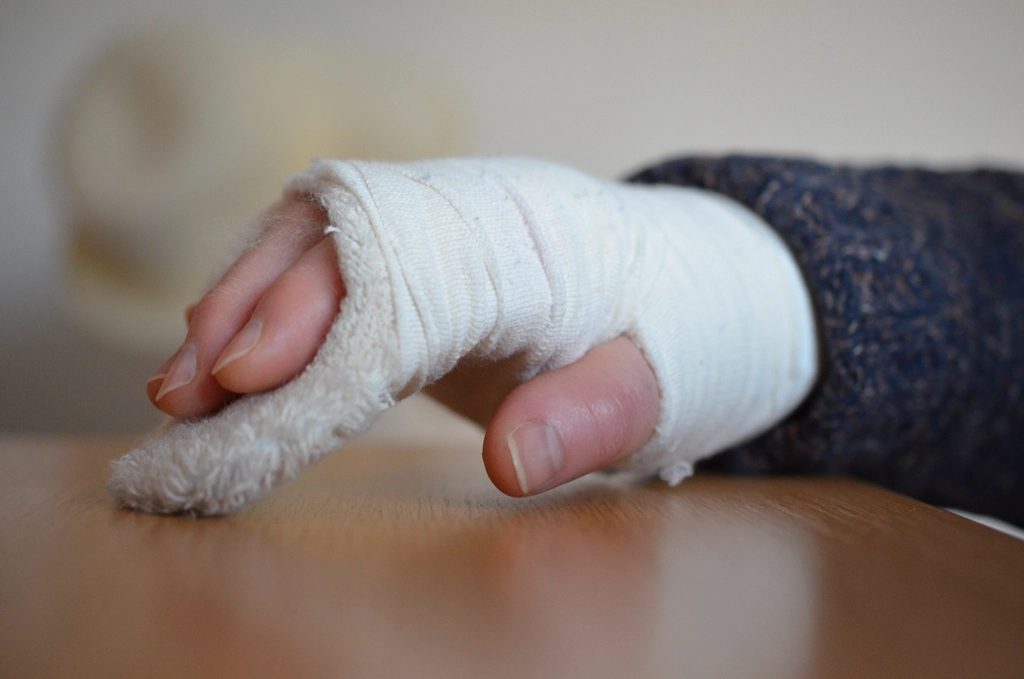
The wrist packs a lot of structures into a small space, and location does most of the sorting. This is the map, with the bedside test that supports each one.
| Where it hurts | Usual cause | Self-test | What the rehab looks like |
|---|---|---|---|
| Palm side, with tingling | Carpal tunnel syndrome | Phalen’s: wrists fully bent, backs together, 60 seconds | Neutral night splint, nerve gliding, setup changes |
| Thumb side of the wrist | De Quervain’s tenosynovitis | Finkelstein’s: thumb in fist, tilt wrist down | Thumb splint, then isometric and eccentric loading |
| Base of the thumb | Thumb base osteoarthritis | Pain and grinding when the thumb is pressed and rotated | Web-space strengthening, splint for pinch tasks, aids |
| Little finger side | TFCC injury | Pain twisting a door handle or pushing up from a chair | Load management, rotation strengthening, sometimes a strap |
| Middle of the back | Scapholunate ligament sprain | Pain and weakness pushing through an extended wrist | Controlled loading, proprioceptive work, assessment |
These bedside tests point rather than prove. Their accuracy varies, so treat a positive as a reason to look harder at that structure rather than as a diagnosis.
This is a documentary review of published evidence and guidance rather than a diagnosis of your wrist. The five here cover the large majority of wrist pain in adults. Others considered and left out because they are less common or need a different pathway include scaphoid fracture, ganglion cysts, Kienbock’s disease, inflammatory arthritis, ulnar nerve compression at the wrist, and referred pain from the neck.
The order reflects how often each explains wrist pain in adults, weighed against how clearly it can be recognised without imaging.
The sources read were NICE guideline NG226 on osteoarthritis, which covers the thumb base, and the 2017 Cochrane review of exercise for hand osteoarthritis by Østerås and colleagues. Evidence checked in August 2026.
What could not be checked: the bedside tests described here have been studied individually with widely varying results, and no single one is reliable enough to confirm a diagnosis on its own. This page does not replace an examination. A scaphoid fracture, which is tender in the hollow at the base of the thumb after a fall, is the one presentation here that is genuinely dangerous to sit on.
Start with whether anything tingles. Numbness or pins and needles moves the answer to a nerve, and which fingers are affected tells you which one. Thumb, index and middle points at the median nerve at the wrist. Little and ring points at the ulnar nerve, usually at the elbow.
Then find the side. Thumb side, little finger side, palm side or back of the wrist separates the remaining four immediately.
Test with a twist, not a stretch. Turning a door handle or a jar lid loads the little finger side. Gripping and lifting loads the thumb side. Pushing up out of a chair loads the whole joint in extension.
Ask what changed. A new baby, a new job, a new hobby, a house move or a fall onto an outstretched hand each point somewhere different, and the answer is usually in the six weeks before the pain started.
What it is
Compression of the median nerve as it passes under a tight band of tissue at the front of the wrist.
Who it affects
Very common. More often women, more often in pregnancy, and more often in people with diabetes or thyroid problems. Repetitive hand work contributes rather than causes it.
How it presents
Tingling and numbness in the thumb, index and middle fingers, classically waking people in the night and relieved by shaking the hand. Later, clumsiness and dropping things.
The self-test
Phalen’s manoeuvre: press the backs of the hands together with the wrists fully bent and hold for 60 seconds. Symptoms appearing in those three fingers supports the diagnosis.
What the rehab looks like
A neutral wrist splint worn at night, which is often the change that stops the waking. Nerve gliding exercises, covered in our guide to median nerve glides. Adjusting the keyboard and mouse so the forearm and hand stay in line.
Limits and cautions
Constant rather than intermittent numbness, or visible flattening of the muscle bulk at the base of the thumb, means the nerve is under sustained pressure and needs assessing rather than managing at home.
Why it ranks first
It is the most common wrist and hand nerve problem by a wide margin, and the night splint is one of the highest-value single interventions anywhere on this page.
What it is
Irritation of the two thumb tendons and their sheath where they pass over the bony bump on the thumb side of the wrist.
Who it affects
Classically new parents, from lifting a baby under the arms with the thumbs spread, and anyone with a sudden increase in thumb-heavy work: phone use, gaming, gardening, and racket sports.
How it presents
Sharp pain over the thumb side of the wrist, worse gripping, lifting with the thumb spread, or turning the wrist. Sometimes a creaking sensation over the tendons.
The self-test
Finkelstein’s test: tuck the thumb inside a loosely closed fist and tilt the wrist down towards the little finger. Sharp pain over the bump is a positive.
What the rehab looks like
A thumb splint that includes both the wrist and the base of the thumb, worn for aggravating tasks over two to four weeks. Then isometric thumb work, progressing to slow loaded lowering. Changing how a baby is lifted, scooping under rather than gripping around, matters more than any exercise.
Limits and cautions
Stretching the thumb hard across the palm is the intuitive thing to do and it reliably aggravates this. So does continuing to lift in the position that caused it while wearing a splint.
Why it ranks second
It is common, it has an unusually clear self-test, and the fix is more about changing one repeated movement than about exercises.
What it is
Wear-related change in the saddle joint at the base of the thumb, where the thumb metacarpal meets the wrist.
Who it affects
Most often people over 50, and considerably more often women. It is the most common site of osteoarthritis in the hand.
How it presents
Pain at the base of the thumb when pinching, turning a key, opening a jar or wringing out a cloth. Often a grinding sensation, and over time the joint can look squared off.
The self-test
Pressing the thumb metacarpal into the joint while rotating it reproduces the pain and often a grating sensation. Pinching a key firmly is the simpler everyday version.
What the rehab looks like
Strengthening the muscles that hold the thumb out and away from the palm, a supportive thumb splint for high-pinch tasks, and changing the tools: wide-handled utensils, an electric jar opener, a key turner. NICE makes therapeutic exercise a core treatment for osteoarthritis and offers topical NSAIDs for the knee, with topical treatment worth considering at other joints.
Limits and cautions
Hard spring grippers and sustained crushing grips load exactly the joint that hurts. Gentle, controlled work is what helps.
Why it ranks third
It causes more day-to-day trouble per square centimetre than anything else here, and it is the one most often written off as something to live with when it is quite treatable.
What it is
Injury or wear in the triangular fibrocartilage complex, a small cushion of cartilage and ligament on the little finger side of the wrist.
Who it affects
People who have fallen onto an outstretched hand, racket and stick sport players, gymnasts and weight trainers, and anyone whose work involves repeated forceful twisting.
How it presents
Pain on the little finger side, worse turning a door handle or a jar lid, pushing up out of a chair, or leaning on the hand. Sometimes a click. Often a clear fall in the history.
The self-test
Loading that side of the wrist while rotating the forearm reproduces it. In practice, twisting a stiff door handle is the everyday version most people can identify.
What the rehab looks like
Reducing the twisting load for several weeks, then strengthening forearm rotation and the muscles that support that side of the wrist. Some people benefit from a strap that supports the joint during loading. This one is slow, often three months or more.
Limits and cautions
Pushing through the twisting that hurts tends to keep it going indefinitely. Where the wrist feels unstable or clunks noticeably, imaging and a specialist opinion are reasonable.
Why it ranks fourth
It is less common than the three above, and it is the one most often missed for months because people expect wrist pain to be carpal tunnel.
What it is
A sprain of the ligament between two of the small wrist bones, in the middle of the back of the wrist.
Who it affects
Almost always after a fall onto an outstretched hand, or after a period of heavy weight-bearing through extended wrists.
How it presents
Pain in the middle of the back of the wrist, worse pushing through the hand, doing press-ups, or bearing weight in a plank. Often a sense of weakness rather than instability.
The self-test
Pain and weakness when pushing through an extended wrist, and tenderness in the middle of the back of the joint just beyond the wrist crease.
What the rehab looks like
Removing weight-bearing on an extended wrist for a period, then controlled loading with the wrist supported and progressive strengthening of the muscles that stabilise it. Press-up handles and dumbbells allow training to continue meanwhile.
Limits and cautions
This is the one to check most carefully after a fall, because a scaphoid fracture presents in nearly the same area. Tenderness in the hollow at the base of the thumb after a fall needs an X-ray, and a scaphoid fracture that is missed can lead to lasting problems.
Why it ranks fifth
It is the least common of the five, and it sits on the list because it is the one where the important job is ruling out the fracture next to it.
| Cause | Location | Tingling | Splint helps | Worse with twisting | Typical timescale |
|---|---|---|---|---|---|
| Carpal tunnel syndrome | Palm side, into 3 fingers | Yes | Yes, neutral at night | No | 6–12 weeks |
| De Quervain’s | Thumb side | No | Yes, thumb included | Yes | 6–12 weeks |
| Thumb base arthritis | Base of thumb | No | Yes, for pinch tasks | Yes, and pinching | Managed long term |
| TFCC injury | Little finger side | No | Sometimes a strap | Yes, strongly | 3 months or more |
| Scapholunate sprain | Middle of the back | No | Sometimes | No, worse pushing | 6–12 weeks |
The tingling column separates the nerve from everything else in one step. The twisting column separates the thumb side from the little finger side.
If tingling wakes you at night in the thumb and first two fingers, start with a neutral night splint and nerve gliding, and review it in four weeks.
If it hurts on the thumb side when you lift, especially since a baby arrived, use a thumb splint for the lifting and change how you scoop rather than grip.
If pinching a key or opening a jar is the problem, that is the thumb base joint. Strengthening plus a change of tools is the combination that works.
If twisting a door handle catches on the little finger side, cut the twisting load for a few weeks and expect this one to take months rather than weeks.
If it hurts pushing through the hand in a plank or press-up, switch to press-up handles or dumbbells and keep training while it settles.
If you fell on the hand and there is a tender spot in the hollow at the base of the thumb, get an X-ray. A missed scaphoid fracture is the one genuinely costly mistake in this area.
A fair question about wrist pain is whether it is worth being seen at all, or whether it will settle on its own. The local picture gives part of the answer. The East Sussex MSK Community Partnership takes self-referrals for NHS physiotherapy, and its published average wait to see an advanced practitioner about a hand or wrist was 16.5 weeks as of the June 2026 figures, the longest of any limb on its list. That is a long time to hold a wrist you cannot name.
What tips the balance is that wrist problems are unusually easy to get wrong from the outside and unusually responsive once labelled correctly. A night splint, a thumb splint and a strap are three different devices for three different problems, and wearing the wrong one for six weeks is a common way to arrive no better. Five minutes of testing separates a nerve from a tendon from a cartilage, and it changes what you buy as much as what you do.
Where a wrist has been painful for more than a few weeks and you are not sure which of these it is, booking an assessment is what shortens the process.
What is the quickest self-test for carpal tunnel?
Press the backs of both hands together with the wrists fully bent and the fingers pointing down, and hold for 60 seconds. Tingling or numbness appearing in the thumb, index and middle fingers is a positive Phalen’s test. It is a pointer rather than a diagnosis: these bedside tests vary a good deal in accuracy, and the pattern of symptoms over weeks tells you more than one minute of holding a position.
Why does my wrist hurt when I do press-ups?
Press-ups on the floor push the wrist to around 90 degrees of extension under your body weight, which compresses the small bones at the back of the joint and stresses the front of the capsule. Using press-up handles, holding a pair of dumbbells, or working on your knuckles keeps the wrist straight and usually removes the pain entirely.
How do I know if it is De Quervain’s tenosynovitis?
Tuck the thumb inside a loose fist and tilt the wrist down towards the little finger. Sharp pain over the bony bump on the thumb side of the wrist is a positive Finkelstein’s test. It typically follows a period of repetitive thumb use, and it is common in the first year after a baby arrives because of how infants are lifted.
What causes pain on the little finger side of the wrist?
Most often the triangular fibrocartilage complex, a small cartilage and ligament structure that cushions that side of the joint. It hurts when twisting a door handle, opening a jar or pushing up out of a chair, and it often follows a fall onto an outstretched hand. It is slow to settle and responds to load management plus rotation strengthening.
Can typing permanently damage your wrists?
Typing rarely causes lasting structural damage, and it can certainly produce tendon irritation and nerve symptoms that persist while the setup stays the same. Wrists held bent upwards raise the pressure inside the carpal tunnel, so a keyboard position that keeps the forearm and hand in a straight line is the single most useful change.
Should I wear a wrist splint?
For carpal tunnel, a neutral splint worn at night is a reasonable first step and is often what settles the night waking. For De Quervain’s, a splint that includes the thumb is the one that works, for two to four weeks during aggravating tasks. Daytime splinting for weeks on end is worth avoiding, because the forearm muscles weaken and the same task overwhelms them again afterwards.
When should wrist pain be checked?
If numbness is constant rather than intermittent, if the muscle at the base of the thumb looks flattened compared with the other hand, if the wrist will not take weight after a fall, or if there is a specific tender point over the scaphoid bone in the anatomical snuffbox after a fall. That last one is a fracture that is easily missed and does badly if left.
PhysioHub – Empowerment through Evidence-Based Education.
Every body is different. Book a thorough assessment and get advice that is specific to you and your goals.
Book an Appointment