
Pain that spreads from the neck across the top of the shoulder, or a shoulder ache that seems to creep up into the neck, is one of the most common combinations we see. The two areas share muscles, nerves and everyday postures, so a problem in one often shows up as symptoms in the other.
Neck pain that sits firmly on one side is worked through in PhysioHub's guide to a sore neck on the right side.
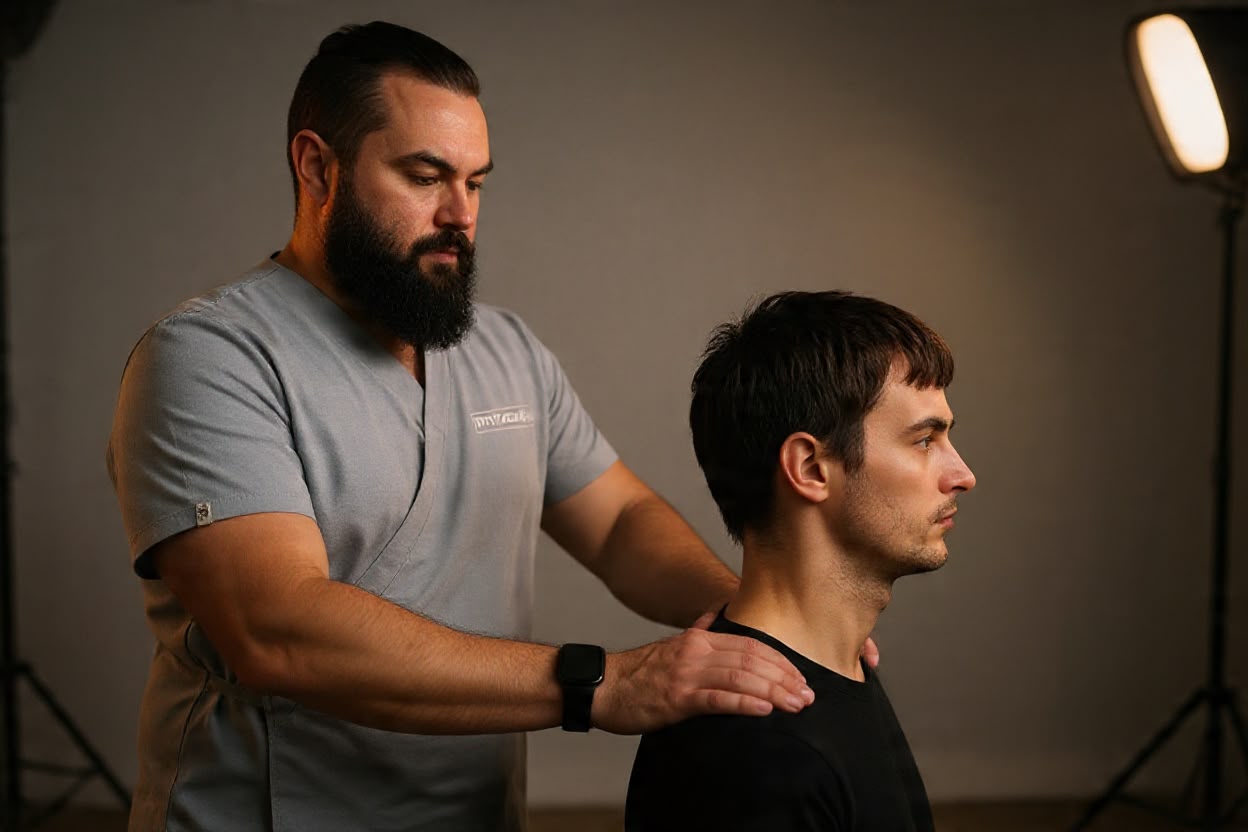
The nerves that supply the shoulder and arm come from the neck, and the large trapezius muscle bridges both regions. That means a stiff or irritated neck can refer pain into the top of the shoulder, and a genuine shoulder problem can leave the surrounding muscles tight and sore up toward the neck. Sorting out which is the primary driver is the first job of any assessment. The NHS page on neck pain and stiff neck is a helpful overview.
A few patterns help. Pain that changes with neck movement, or that travels below the elbow with pins and needles, points toward the neck and its nerves. Pain triggered by reaching, lifting or lying on that side, with a painful arc as you raise the arm, points toward the shoulder itself. Often both contribute, and testing each in turn shows how much each one is responsible for.
Treatment follows the driver. Neck-driven symptoms respond to restoring neck movement, easing the irritated tissue and strengthening the deep neck and upper-back muscles. Shoulder-driven symptoms need targeted rotator cuff and shoulder-blade work. Where posture and prolonged desk positions feed the problem, changing how you load the area through the day makes the gains stick. Our guide to physiotherapy for rotator cuff injury covers the shoulder side in depth.
Pain sitting between the neck and the shoulder gets treated in the wrong place more often than almost anything else, partly because every obvious route targets the sore spot: a massage, a rub, a foam roller, a stretch held in a doorway. Alex, a HCPC-registered physiotherapist, assesses both regions in one session because the sore spot and the source are frequently different places.
The neck refers pain into the top of the shoulder and the shoulder blade very readily, and a shoulder problem can leave the neck aching from compensating for it. Treatment aimed at whichever area hurts therefore has a decent chance of missing. Separating them is straightforward once both are tested together: whether neck movement changes the shoulder symptoms, whether resisted shoulder testing reproduces them, and whether anything travels down the arm in a pattern that warrants a nerve screen. Relief tends to hold well past the weekend once the driver is the thing being treated.
For the neck-led version of this, our neck pain page sets out the wider approach.
Why does my shoulder hurt when the problem is my neck?
Because the shoulder's nerve supply comes from the neck, an irritated neck can be felt as shoulder pain even when the shoulder joint is healthy.
Should I worry about arm pins and needles?
Occasional tingling is common with neck irritation. Persistent numbness, weakness or symptoms down the whole arm should be assessed promptly.
PhysioHub – Empowerment through Evidence-Based Education.
Every body is different. Book a thorough assessment and get advice that is specific to you and your goals.
Book an Appointment