
Pain that sits on one side of the body, whether it is the neck, shoulder, back, hip or knee, is extremely common and usually reflects how that side is loaded and used. This guide focuses on musculoskeletal, movement-related pain, the kind physiotherapy treats, and how we work out what is driving a one-sided problem.
The sensation people describe as a trapped muscle is unpicked in PhysioHub's guide to trapped muscle pain.
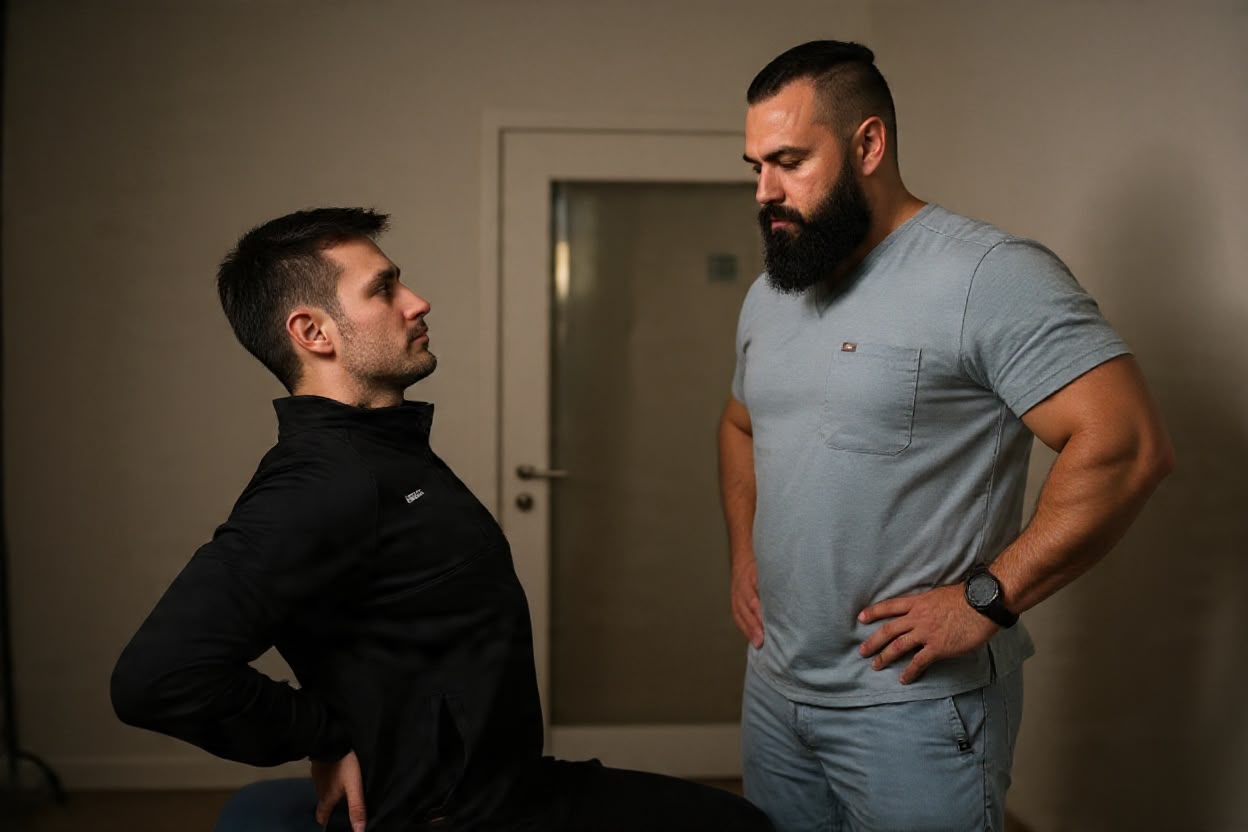
Bodies are rarely perfectly symmetrical in how they move and load. You may carry a bag on one shoulder, sit twisted toward a screen, sleep on one side, or favour a dominant leg in sport. Over time, one side takes more load, and its tissues can become irritated while the other stays fine. Most one-sided musculoskeletal pain is exactly this kind of loading story. The NHS overview of sprains and strains covers the common tissue causes.
We start by locating the pain precisely and understanding what makes it better or worse, then test the movements and structures in that region to reproduce it. Establishing a clear, specific diagnosis, rather than a vague label, is what makes treatment effective. Our article on whether you need a clear diagnosis to get better explains why this matters.
Where one-sided pain runs from the lower back down into the leg, our page on sciatica covers how that particular pattern is assessed and treated.
This guide is about musculoskeletal pain that changes with movement and position. Some one-sided pain, particularly in the chest, abdomen or with symptoms like breathlessness, fever, or feeling unwell, is not musculoskeletal and needs medical rather than physiotherapy assessment. If your pain does not behave like a movement problem, see your GP or seek urgent care.
The belief that one-sided pain means something internal has gone wrong is what books most of these appointments, usually after a fortnight of late-night searching. It deserves to be taken seriously, and screening for it takes a few minutes. What the examination turns up far more often is a load story: a laptop and mouse worked from the same side five days a week, a commute down the A22 with one elbow parked on the door, a bag carried on the same shoulder since school.
Bodies become asymmetrical through habit long before they do through pathology. The question that settles it is whether the pain behaves mechanically: whether it changes with position, responds to movement, and reproduces on hands-on testing of the tissue you would predict. Pain that ignores all of that, or that arrives with fever, unexplained weight loss, night pain or bowel and bladder symptoms, belongs with a GP first, and saying so plainly is part of the job.
If you are unsure whether what you are feeling is mechanical at all, start with a free discovery and triage call.
Does one-sided pain mean something is wrong with that organ?
Not for movement-related musculoskeletal pain. But pain that is constant, unrelated to movement, or comes with other symptoms should be checked medically.
Can posture and habits really cause one-sided pain?
Yes. Repeated asymmetrical loading is one of the most common reasons a single side becomes sore.
PhysioHub – Empowerment through Evidence-Based Education.
Every body is different. Book a thorough assessment and get advice that is specific to you and your goals.
Book an Appointment